

A New Course by Ilya Ibryaev
"Water and Reflection:
Painting Reflections That Hold Their Own Light Layer"
You learn where to start a wash, how far to take it, and when to stop, so the painting holds the state you felt. You paint a harbour at anchor, a canal in Venice, light under a tree canopy, and a street after rain
5 paintings. 12 video lessons. Lifetime access.
Subtitles in 6 languages.
At a Glance
At a Glance
Alla prima gives you no second attempt, and that is what makes the decisions teachable.
Alla prima means one sitting and no going back. Ilya lays the largest masses first, so the object and its reflection settle as one whole, then adds only the detail the painting can hold without going flat.
Is this right for you?
Every artist below will walk away with a specific skill from this course.
You paint the object, then repeat it below the waterline and soften the edges. The surface hardens into a mirror and the painting stops moving.
Every value matches the reference and the painting still says nothing. The colour is correct, the mood is missing, and you cannot find where.
You know the subject, the brush is loaded, and you wait. The first stroke feels like the one that decides whether the sheet survives.
It works while it is wet. Then you correct, then you correct the correction, and by the third pass the colour has turned grey.
ILYA'S APPROACH
- He starts with the largest shapes and only then decides how much information the painting can carry.
- Ilya begins with large colour masses, never with the interesting part. The crown of a tree and its reflection go down as one connected shape. By the time he reaches the detail, the painting is already holding together.
- Here he works both into wet paper and onto dry, choosing which the passage needs. Then the planes separate: far, middle, foreground, each at its own strength. Everything after that is a decision about how much to leave unsaid.
- The reference is only an image of the subject. What Ilya paints is the state he was in when he saw it, and that is the part he explains out loud while he works.

You need to protect the painting's energy
Course program
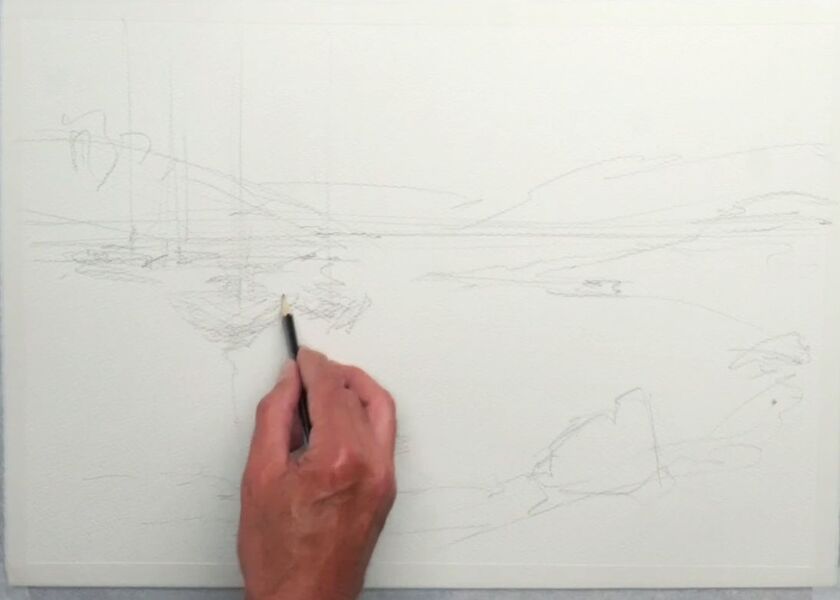
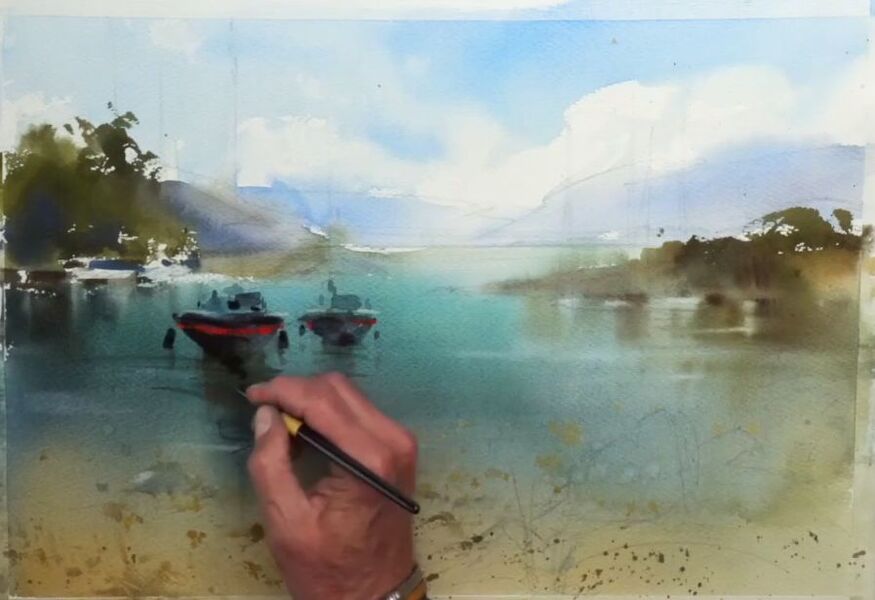
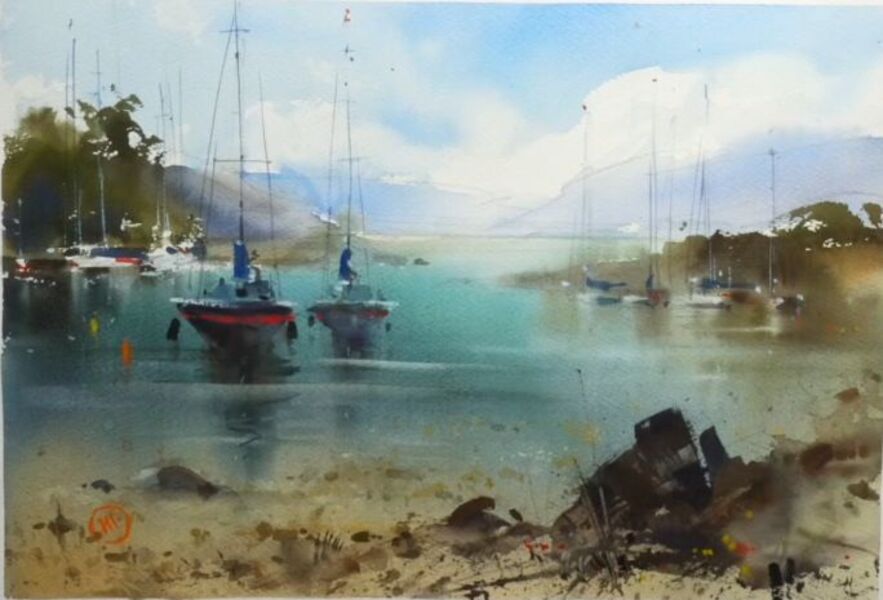
Lesson 1. Wide washes and a warm whole
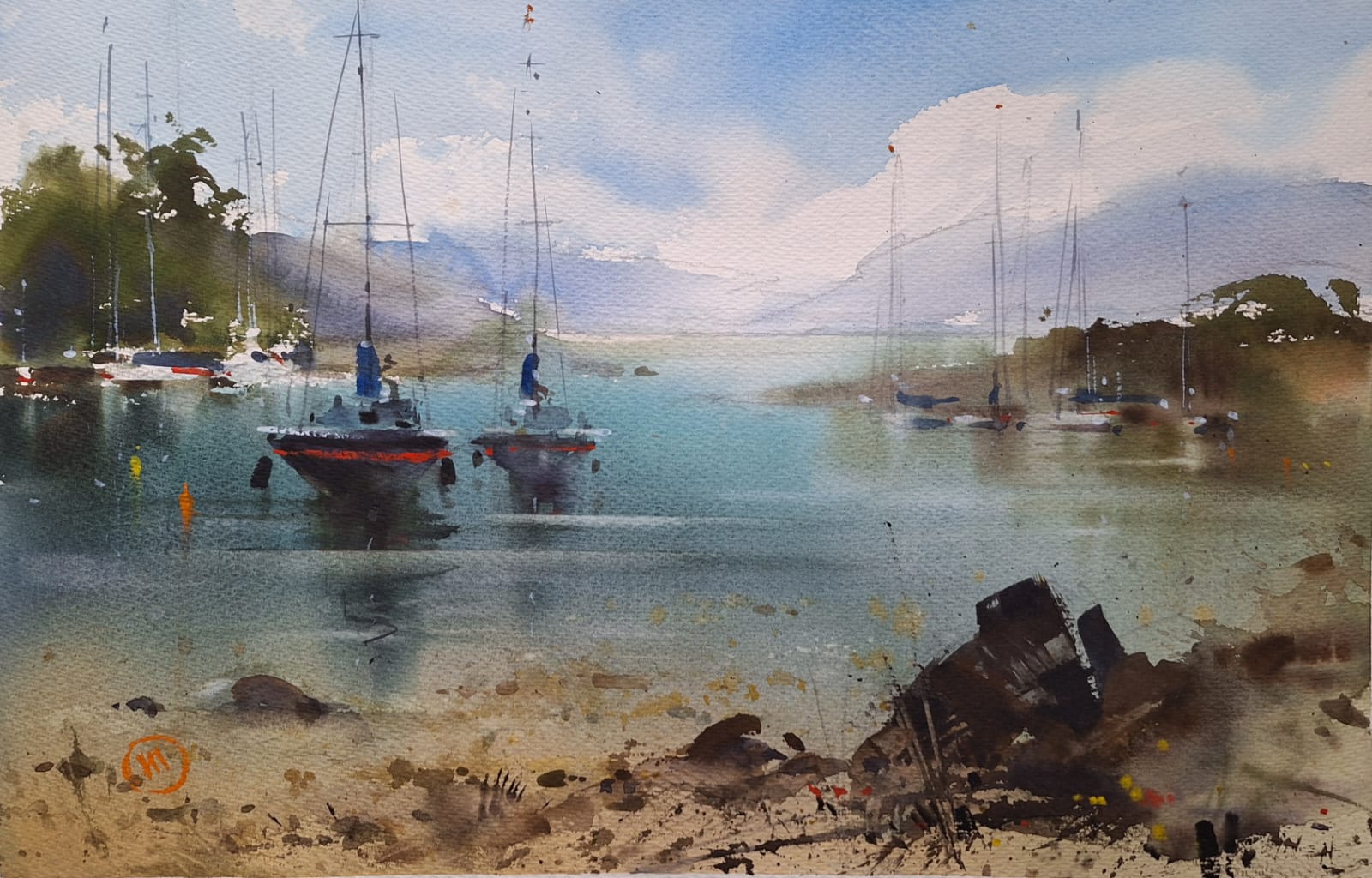
A harbour with yachts and boats. Broad warm washes, wet paper and dry, then the foreground shore scratched and spattered at full strength.
Lesson 2. The fragment instead of the whole
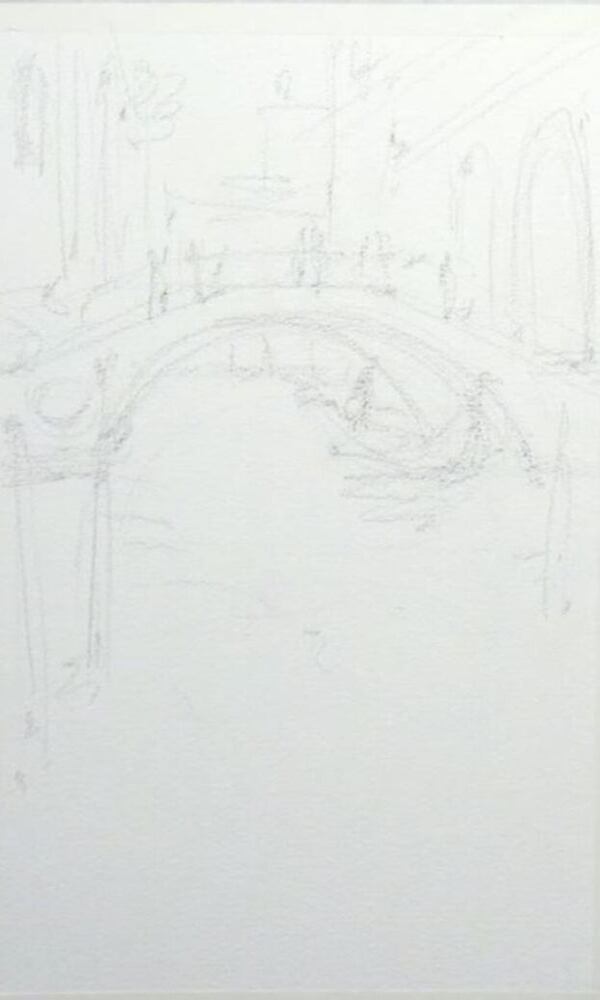
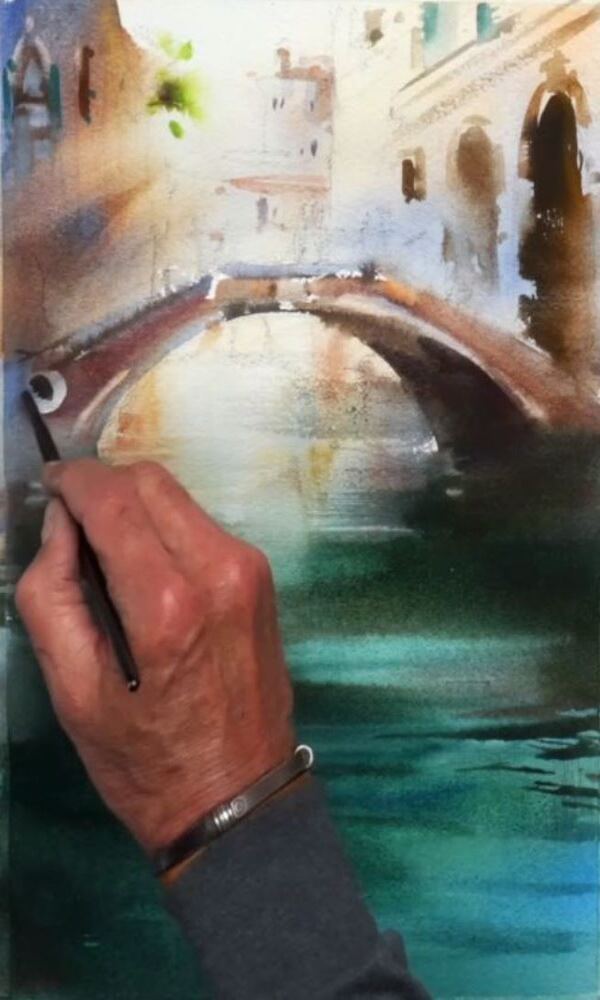
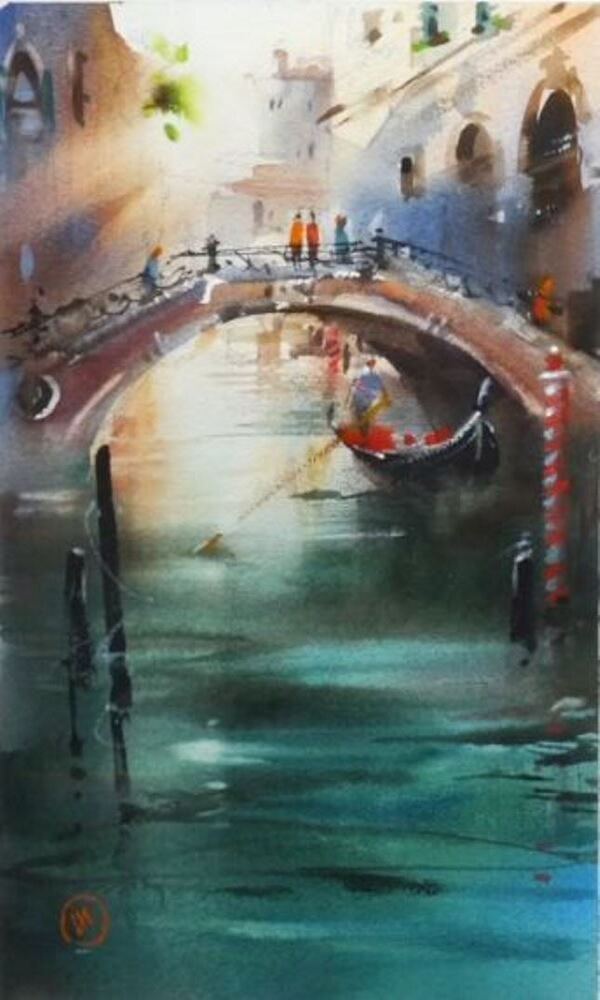
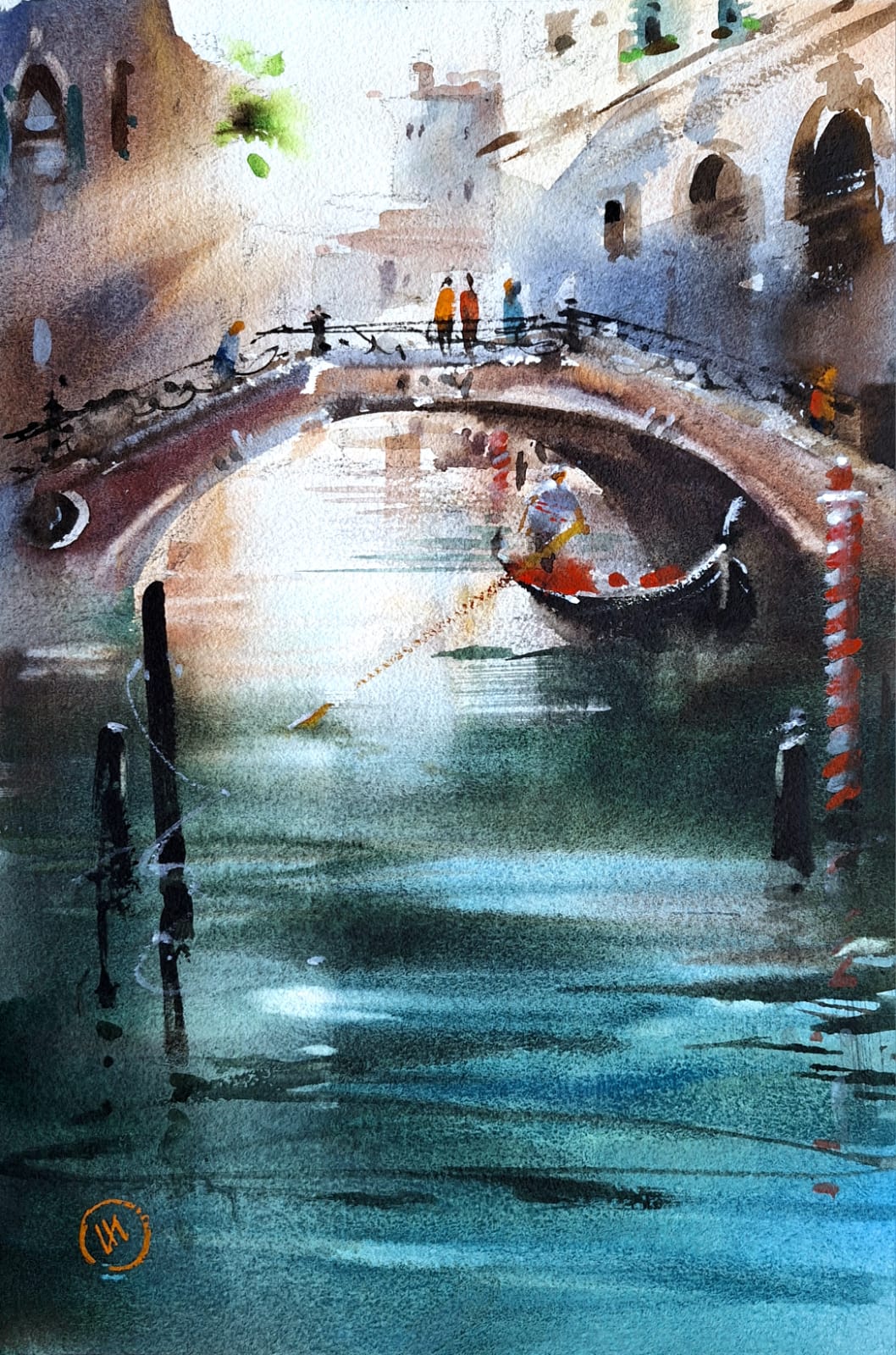
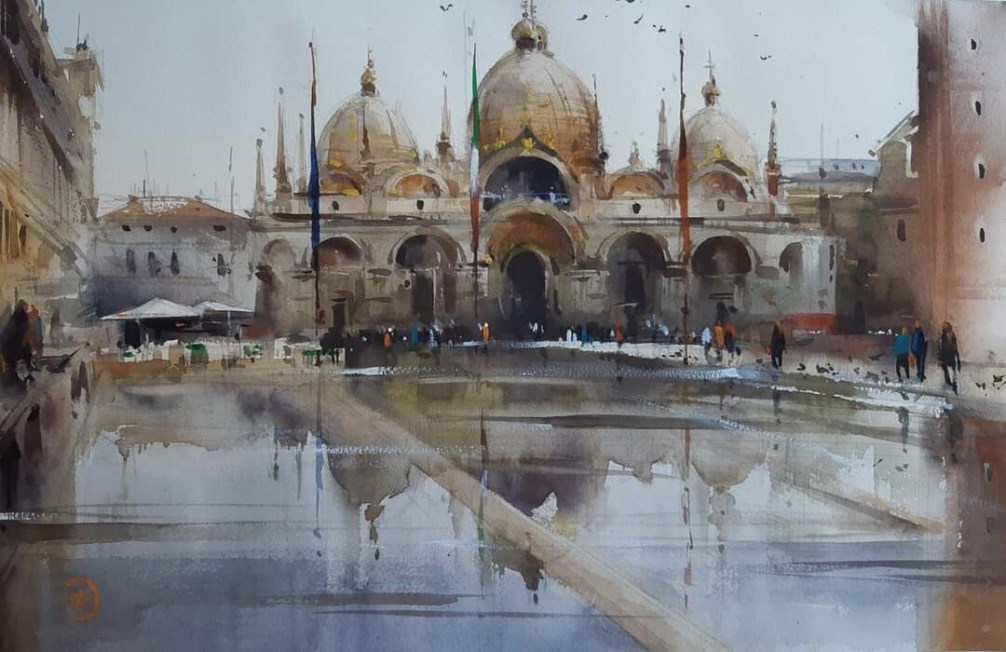
A Venetian canal reduced to one bridge and the water under it. Most of the architecture left out so the reflection carries the painting.
Lesson 3. One mass, above and below
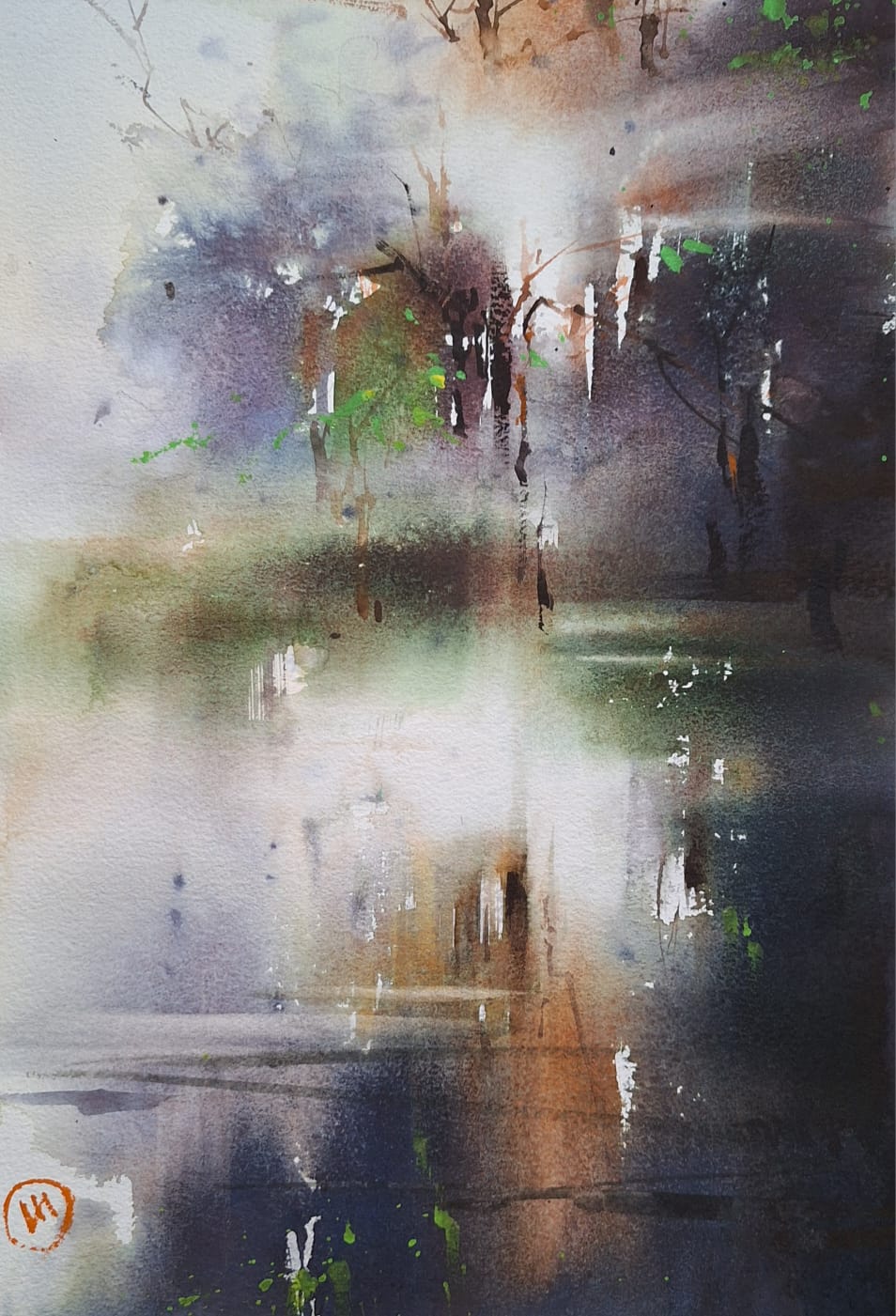
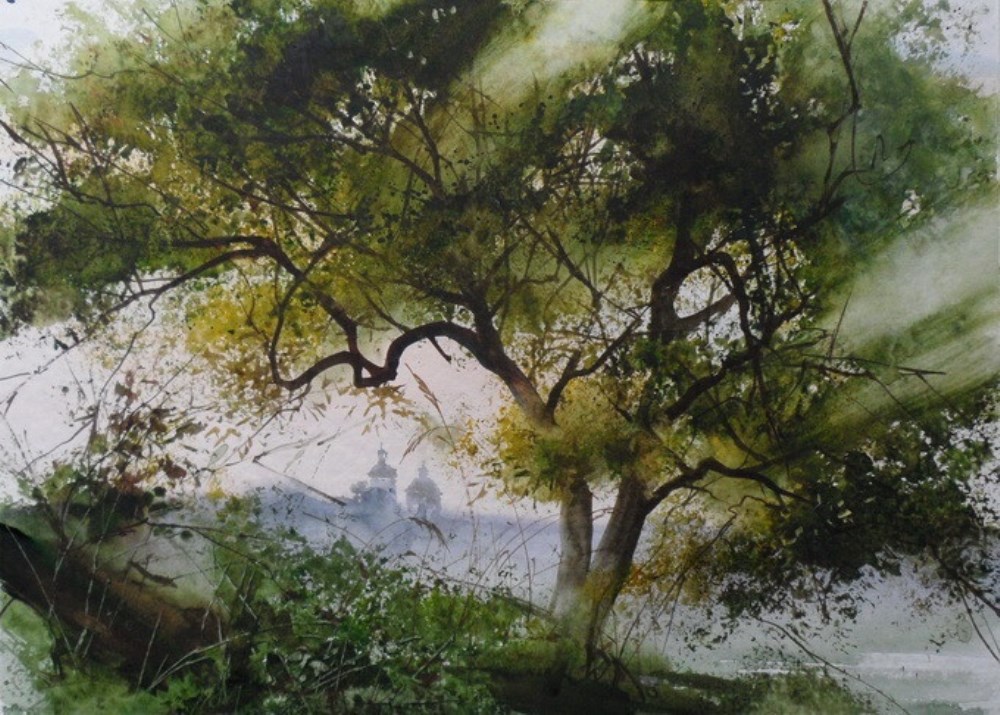
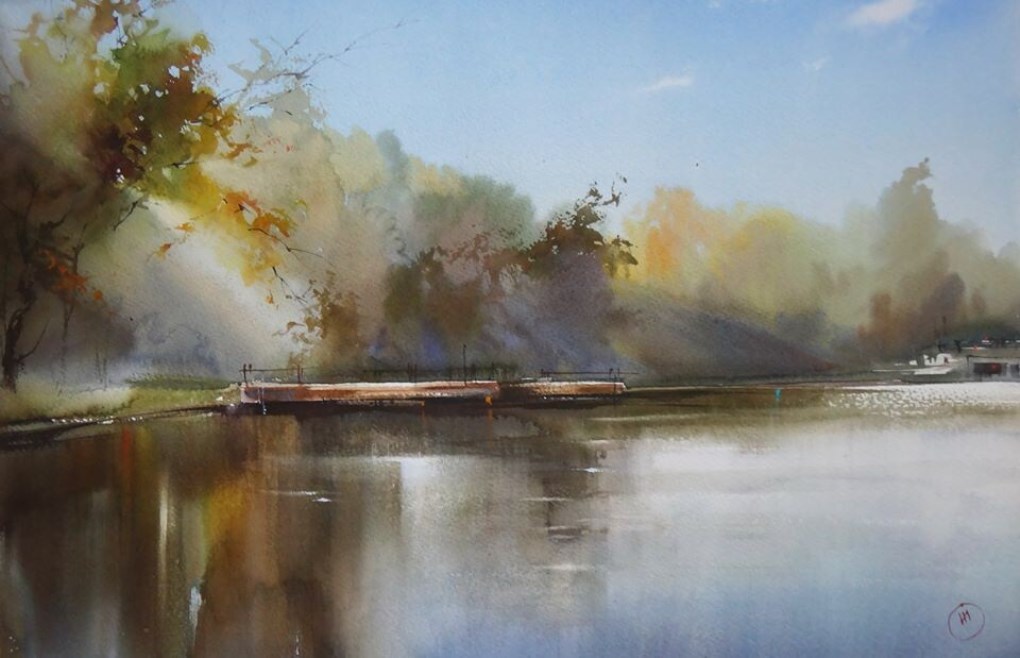
Light through a tree canopy and the water beneath it. Crown and reflection painted as one connected mass, with the light accent active in both.
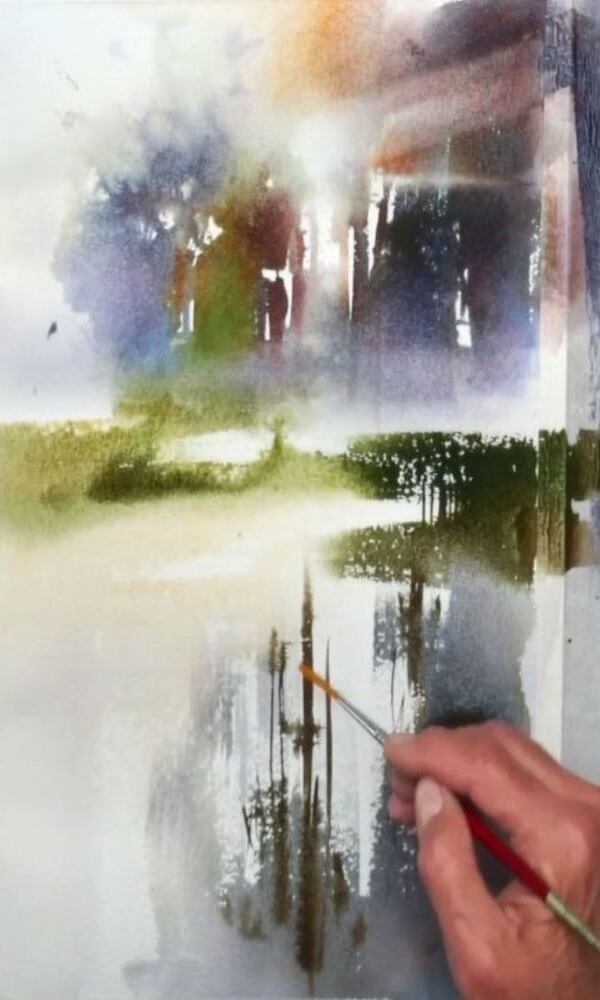
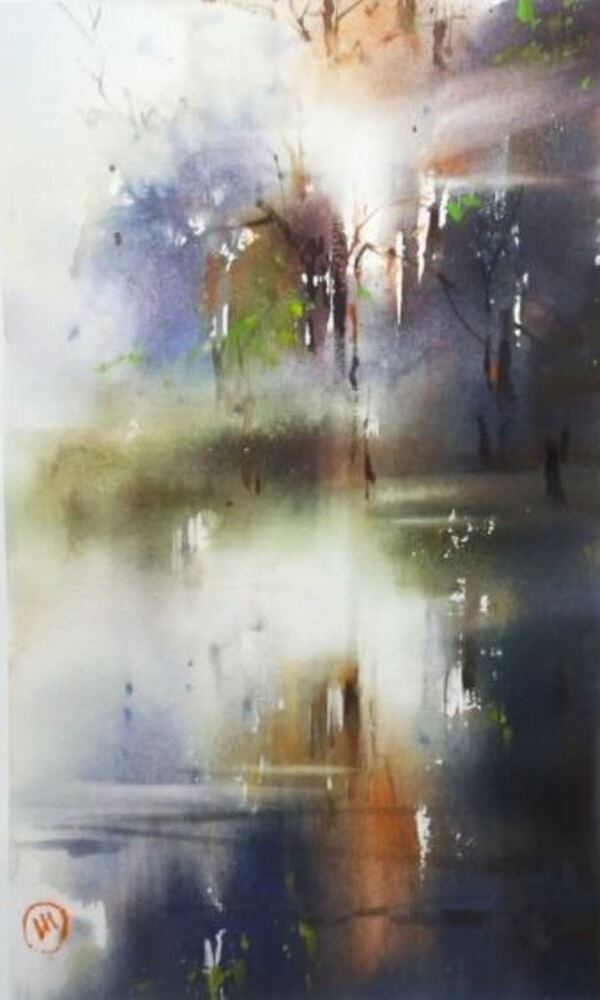
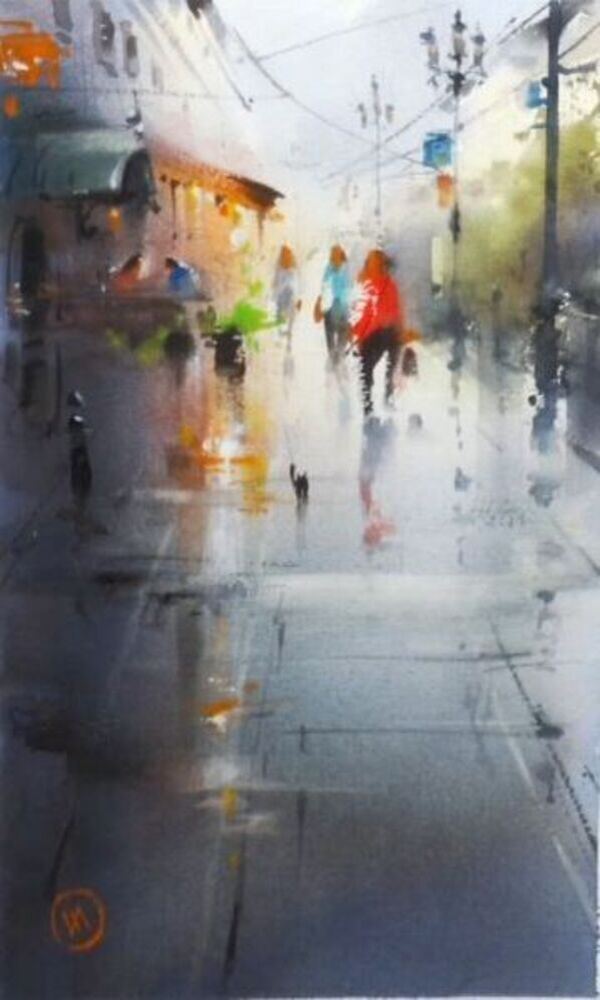
Lesson 4. Reflection on a hard surface
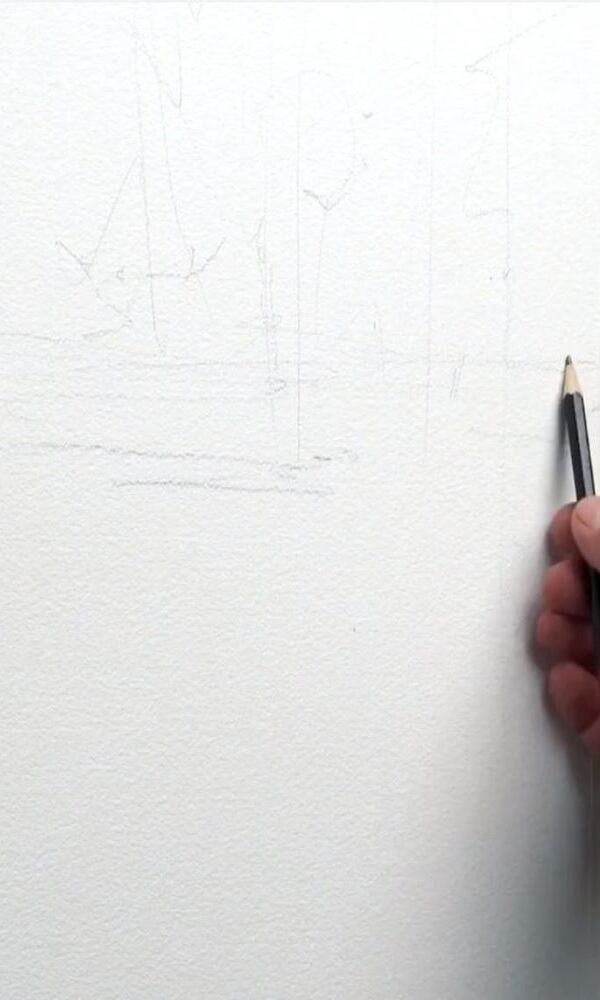
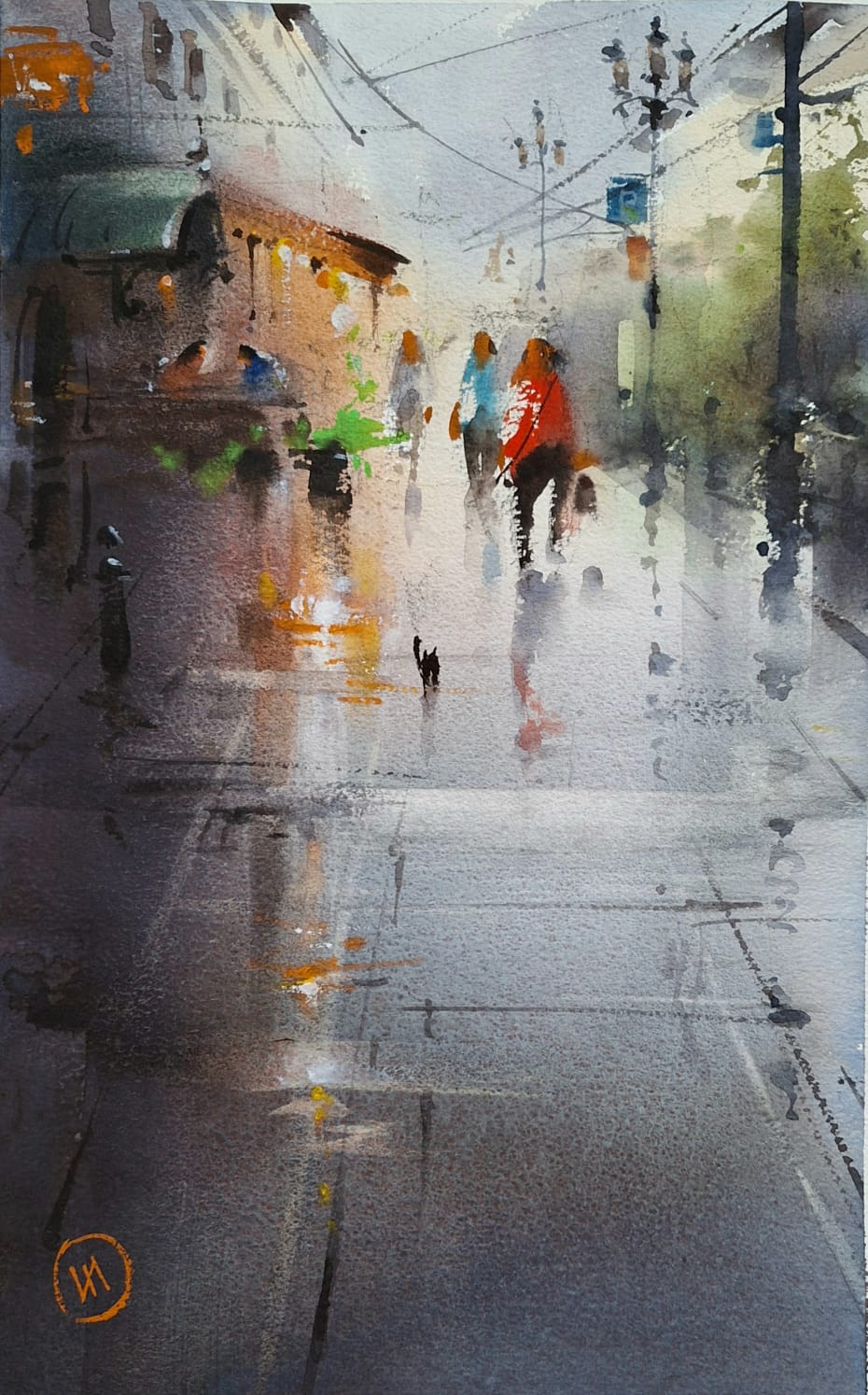
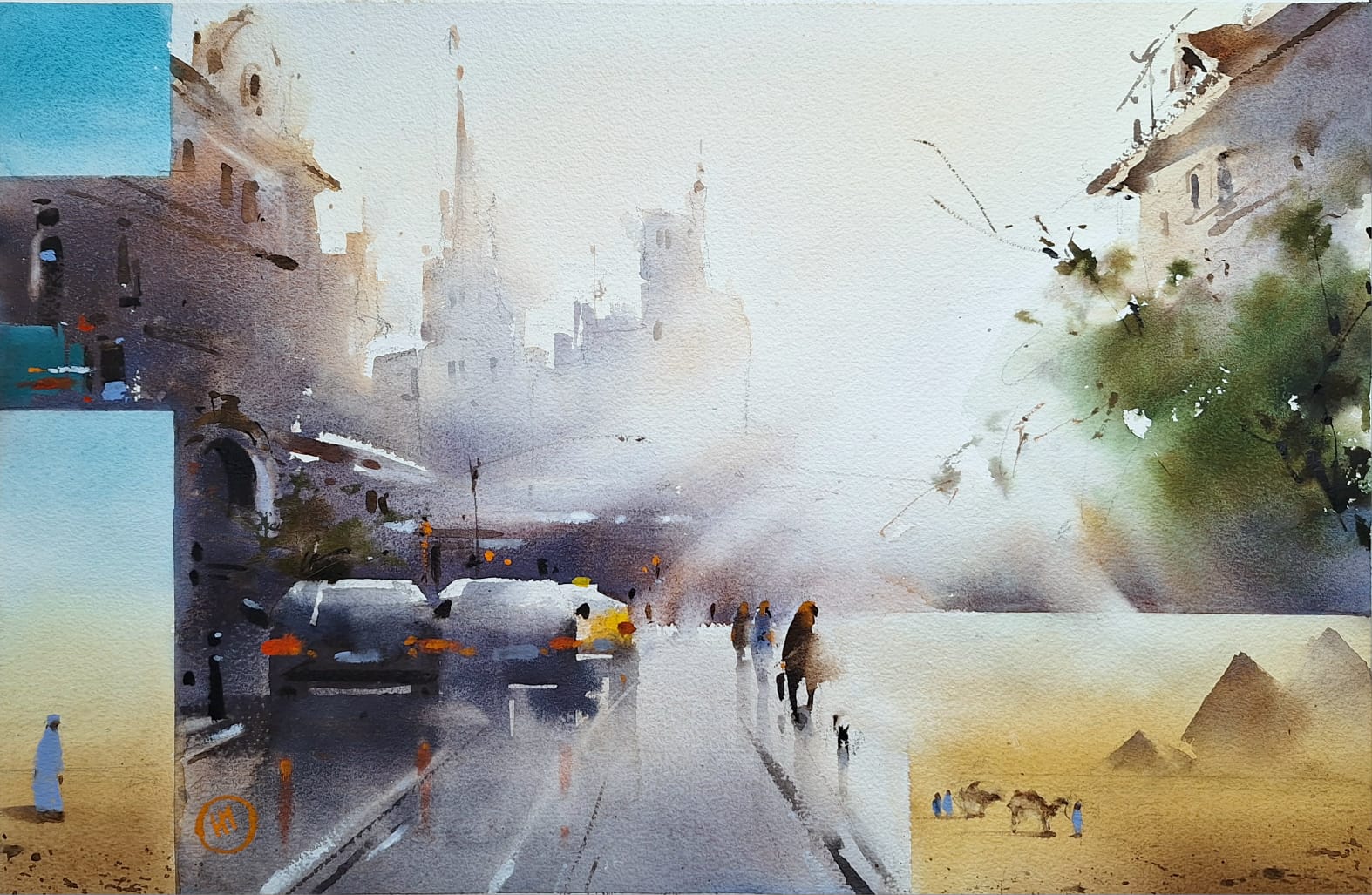
A street after rain. You learn to draw city architecture, the linear and aerial perspective of a street, and figures, then work the reflections on wet asphalt.
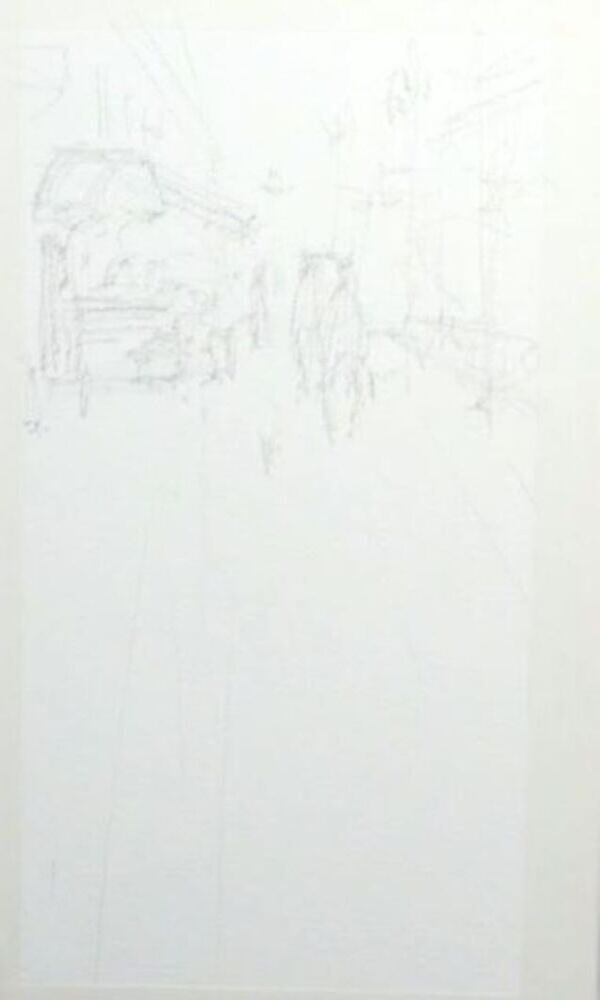
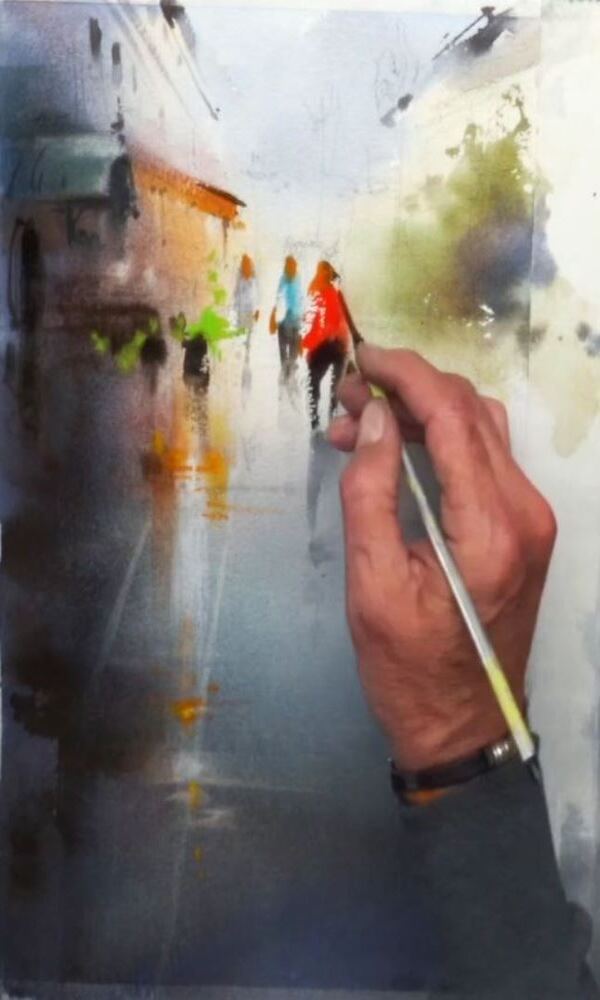
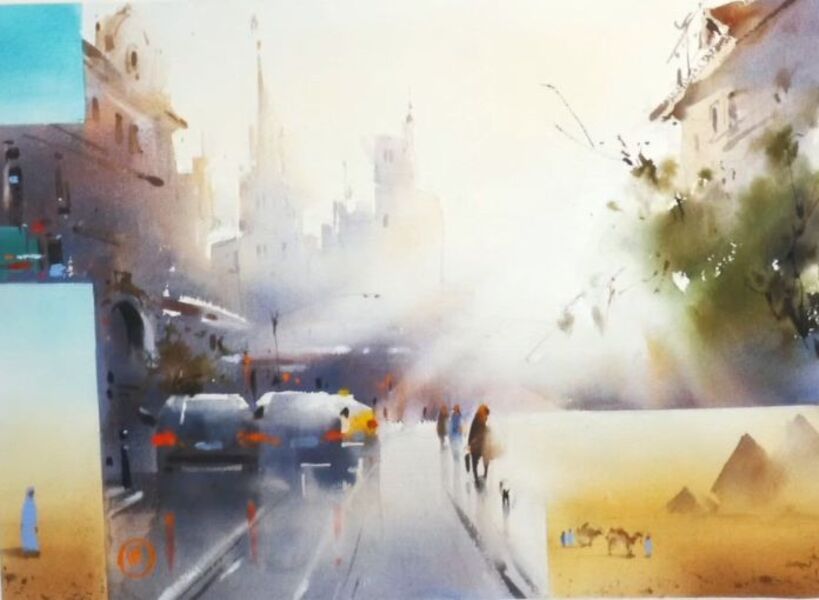
Bonus lesson. Two spaces in one sheet
Nature and a human presence held in one painting, in two spaces at once. Mixed materials, free thinking, and no reference to match.
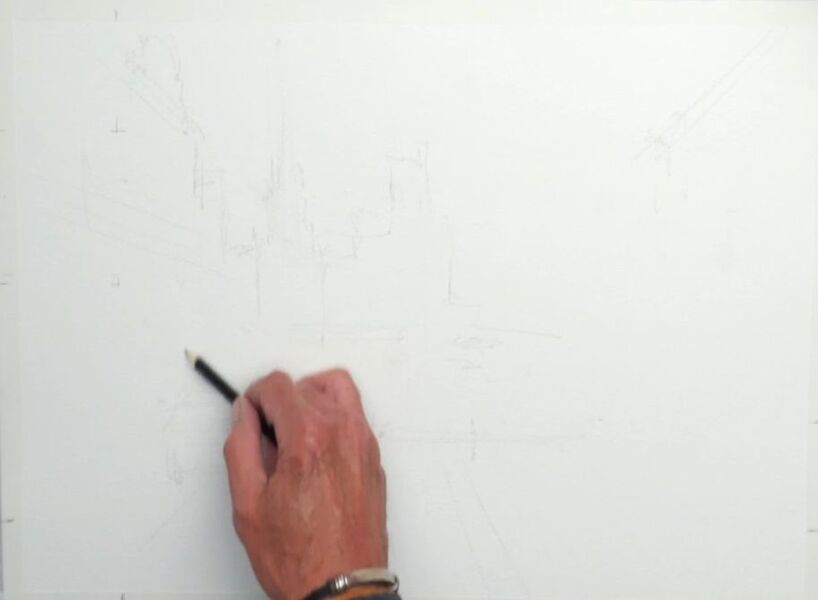
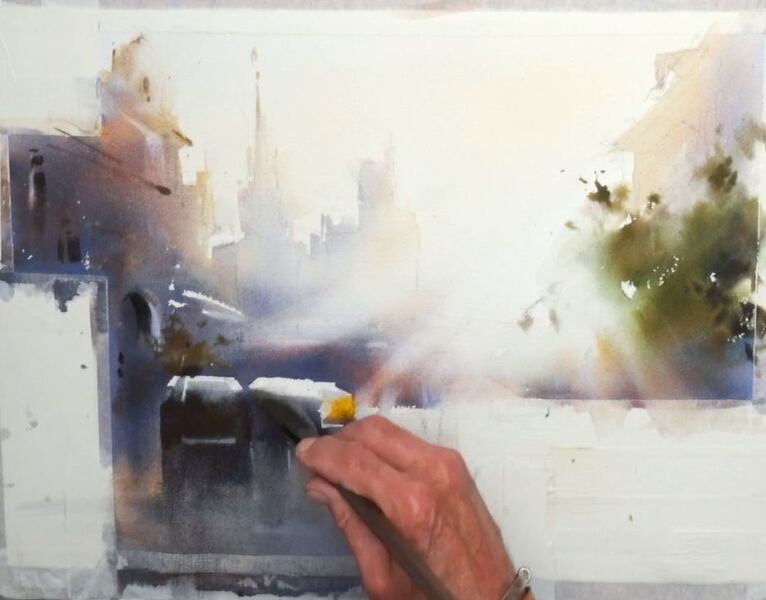
lesson sample
THIS IS WHAT YOU WILL PAINT
Five paintings. The same order of decisions applied to water in five different states.


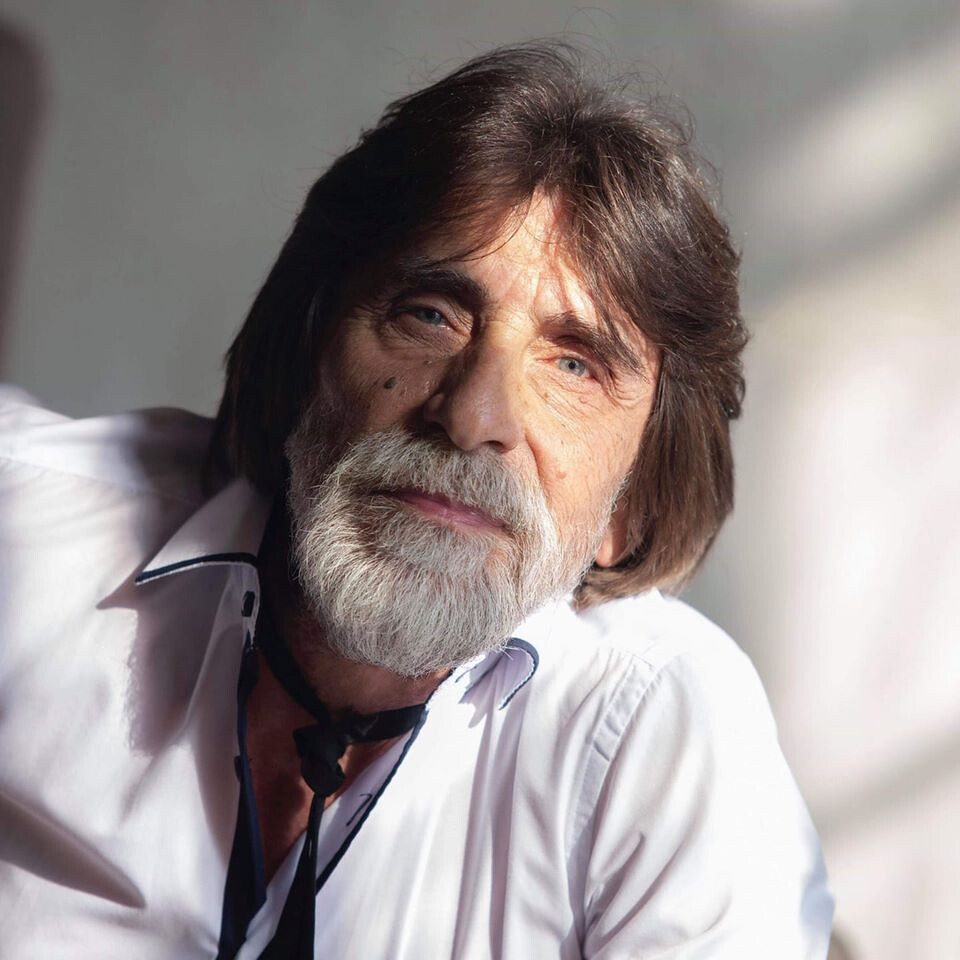
MEET ILYA IBRYAEV
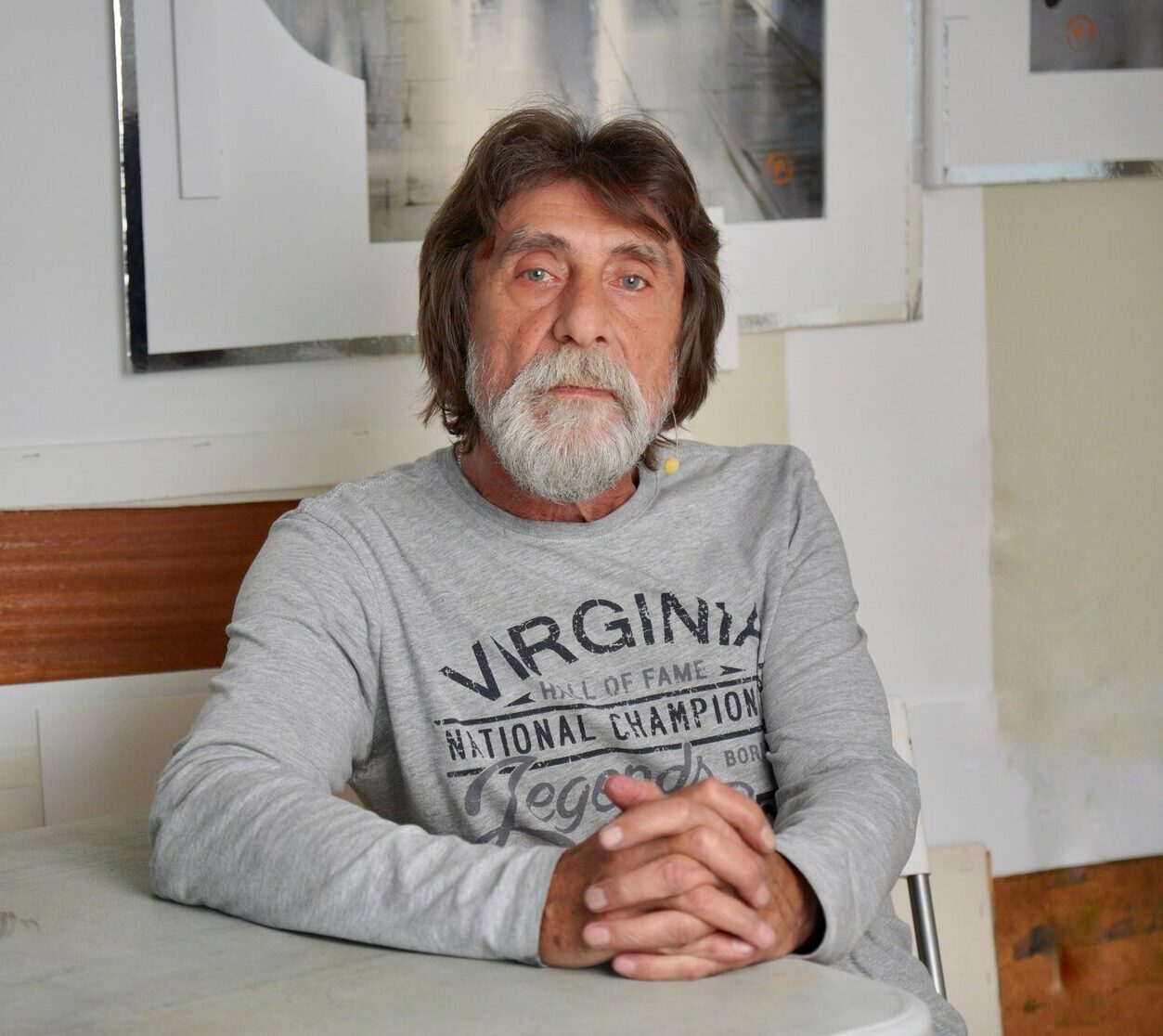
- Member of the International Watercolor Society and its representative in Russia
- Prize winner and participant in watercolour exhibitions, contests, and festivals
- His works are held in museum and private collections around the world
- More than 20 years of teaching watercolour
- More than 400 students from 55 countries have taken his courses in English
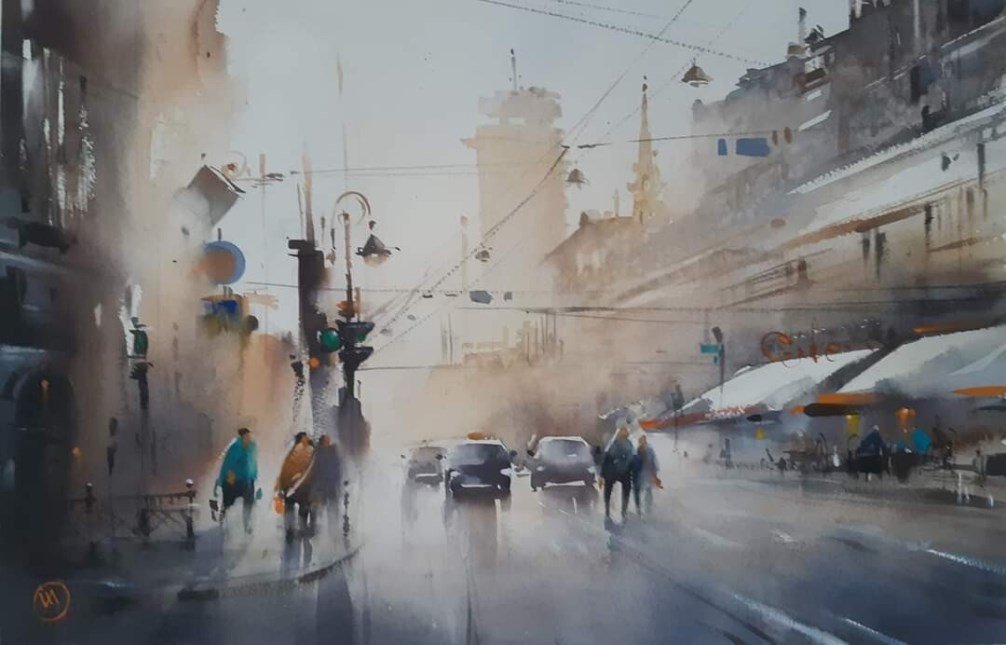
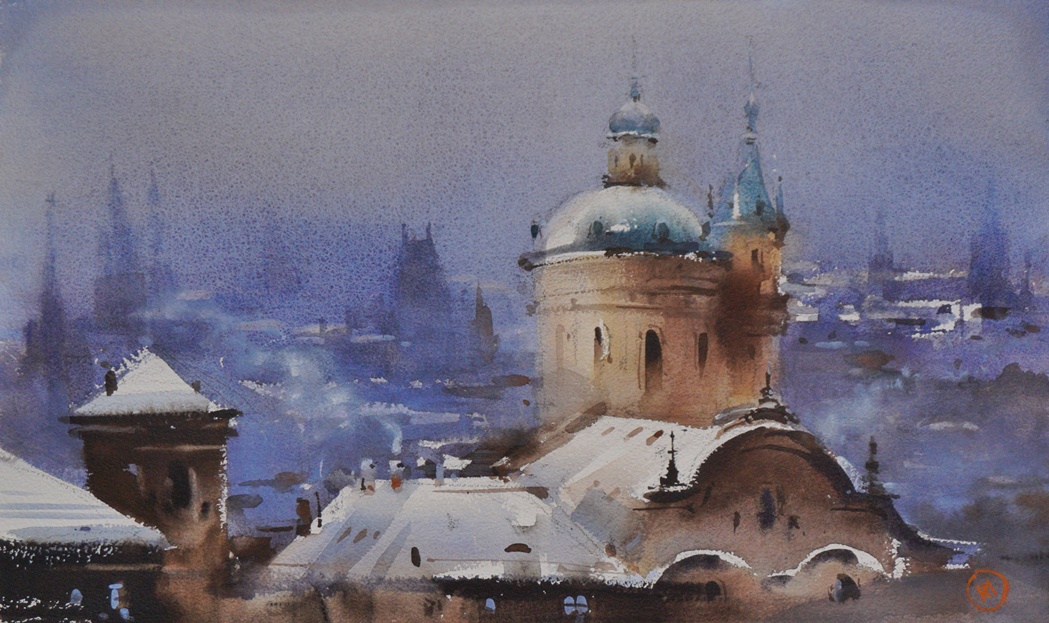

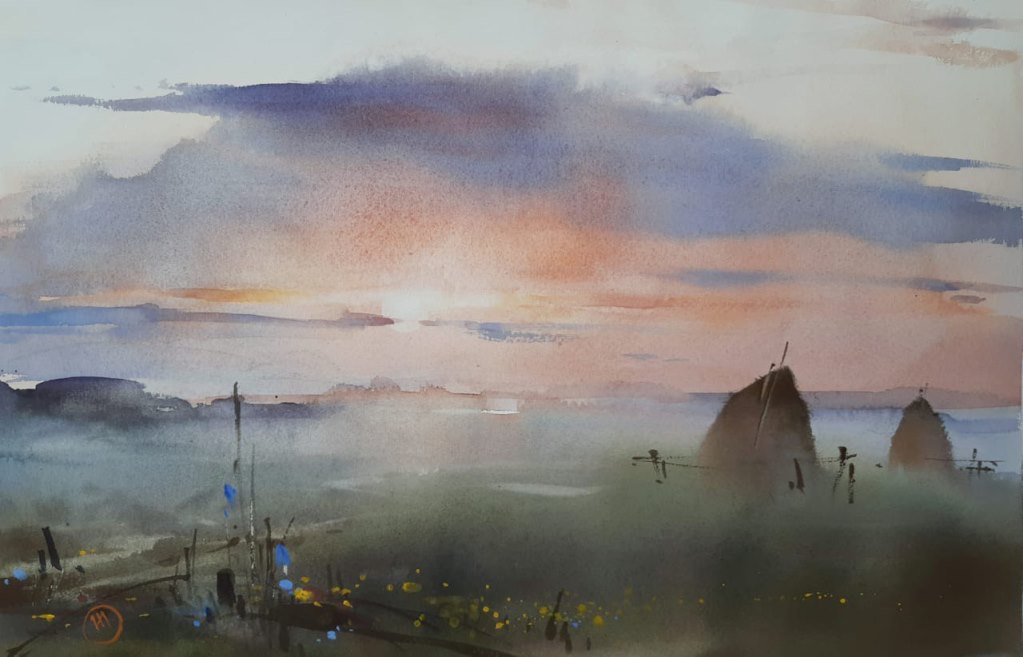
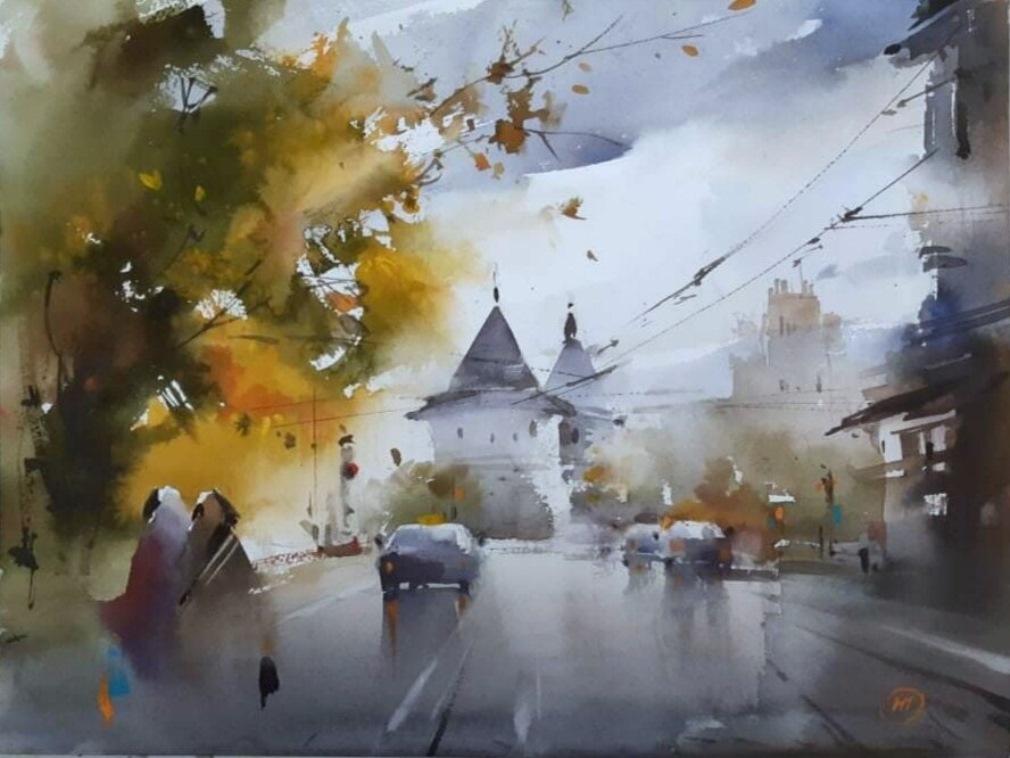
WHAT YOU WILL ACHIEVE
Reflections that hold water
You paint the reflection as a shape with its own edges, not the object turned upside down.
One mass, then the detail
You start wide and stay wide until the structure works. Detail becomes a choice.
Water in four states
Open sea, a canal under a bridge, water under a tree canopy, wet asphalt after rain.
Wet and dry in the same sheet
You know which passage needs damp paper and which needs a dry edge, and stop guessing.
The state, not the subject
The photograph gives you the subject. What you paint is the state you were in when you saw it.
Knowing when to stop
The detail you leave out is what keeps the painting alive. Ilya calls it protecting the energy.
A first stroke without hesitation
Alla prima removes the option of correcting, which is what removes the fear of starting.
Support and feedback
Join our international and artistic community
- Connect with like-minded artists, share advice and feedback.
- Join daily discussions on drawings and art-related topics.
- Enjoy a welcoming space moderated by our Community Manager and Support Team.

Student results
From students who have painted with Ilya
CHOOSE YOUR PLAN
Plan
Standard
- 12 video lessons in full HD
- 5 watercolor works by the end of the course
- 24/7 access from any location at your own pace
- LIFETIME access to the video lessons
- Access to the moderated students community on WhatsApp
- Final project (your own painting)
Bonus
- 30 ArtiCoins
Plan
Master Bundle
- All five of Ilya's courses at Artefacto
- 49 video lessons in full HD
- 22 watercolor works by the end of the course
- 24/7 access from any location at your own pace
- LIFETIME access to the video lessons
- Access to the moderated students community on WhatsApp
- Final project (your own painting)
Bonus
- 150 ArtiCoins
Plan
Standard
- 12 video lessons in full HD
- 5 watercolor works by the end of the course
- 24/7 access from any location at your own pace
- LIFETIME access to the video lessons
- Access to the moderated students community on WhatsApp
- Final project (your own painting)
Bonus
- 30 ArtiCoins
Plan
Master Bundle
- All five of Ilya's courses at Artefacto
- 49 video lessons in full HD
- 22 watercolor works by the end of the course
- 24/7 access from any location at your own pace
- LIFETIME access to the video lessons
- Access to the moderated students community on WhatsApp
- Final project (your own painting)
Bonus
- 150 ArtiCoins
WHAT ELSE IS IN THE MASTER BUNDLE
Four more courses with Ilya. The same order of decisions, applied to seasons, weather, and cities.

Three atmospheric landscapes built wet on wet, where the whole lesson is control of water against pigment.
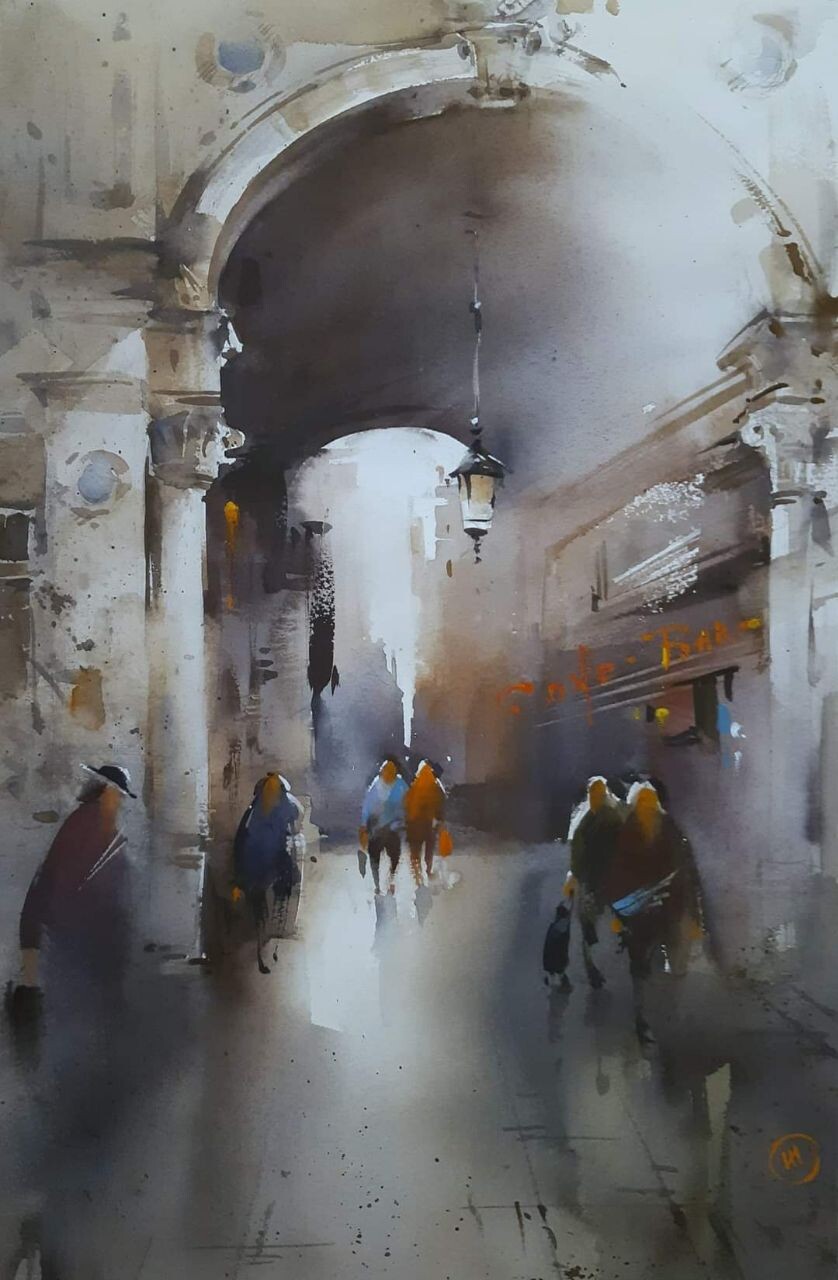
Six paintings across land and city. Composition, perspective, trees, figures, and working from memory as well as from a photograph.

Four winter paintings alla prima, from the first brushstroke to a finished sheet without correcting.
Two landscapes and two cityscapes in 3.5 hours. Light, mist, and air, and how to keep a city looking like it is waking up.
Risk-Free Learning. We Care About You.
100% guarantee
If after 1 to 2 lessons within the first week this approach is not for you, you get your money back. Within 14 days after payment.
Any level, same method
Alla prima works the same way whether this is your first landscape or your hundredth. You never match a reference, so there is no version of the painting you can fail against.
Freedom & Mobility
Access any time. Go at your pace. Smartphone, tablet, or laptop.
Materials for the COURSE
You probably have most of what you need.
Paper: Saunders Waterford cold pressed, 300 gsm. Arches or Baohong work equally well, cold pressed or rough.
Paints: Ilya works with White Nights by Nevskaya Palitra in tubes. His core palette runs warm and earthy: ultramarine, cadmium orange, cadmium red, cadmium yellow medium, yellow ochre, red ochre, raw sienna, sepia, turquoise, and lavender. He uses black, but never Payne's Grey. Any brand substitutes without changing the result.
Brushes: a natural hair flat for the large washes, a round for the body of the work, liners for the fine marks, and a fan brush for texture. Add a sponge, a spray bottle, and paper towels.
The full list, with the exact colours for each painting, is inside the course.
These are suggestions. Use what you already own.
Still have questions?
Our team is here to help. Not sure which plan is right for you? Just reach out — we'll guide you in a few minutes.
Contact usFAQ

CLOSING
You have stood at the edge of water and seen the whole scene sitting in it, upside down and lit from underneath, and thought: I want to paint that.
Then you painted it, and somewhere around the third pass the water went grey and stopped moving.
The colour was never the problem. The order was, and so was the moment you should have put the brush down.