

A New Course by André Kano
Most artists see a scene. André Kano observes it.
The Observation Method Behind Watercolor Landscapes
Learn to read light, shadow, and depth before you touch the brush
Build color harmony with 5 pigments instead of using every tube on your palette
Interpret the scene rather than reproduce the reference
4 paintings · 2.5 hours of HD video · Lifetime access
At a Glance
At a Glance
André paints every subject with 5 colors. Most of his students arrive using all of them.
André Kano · Rockwell International Brand Ambassador · Board member, AAPOR · Country Leader for Portugal, FabrianoinAcquarello · Guest artist in 10+ countries
"Seeing is different from observation. Seeing is: I see some subject, okay. Observing is: why is this building in this perspective? It demands studying. Deep studying." – André Kano
What looks like intuition turns out to be a sequence of observations you can learn and repeat. André teaches the decisions before the brush, not the strokes.
Is This Course Right for You?
5 problems this course was built to solve
You pick colors to mix and the result goes muddy or disharmonious. You need to learn which pigments to combine to get the color you want.
You use every tube available. The painting loses harmony. André works with five and gets stronger results.
Too many elements, no focal point, no hierarchy. You want to know what to emphasize and what to leave out.
You reproduce the reference photo. The result looks like the photo, not a painting. You want to create your own version of the scene but do not know how.
Buildings, objects, landscape elements sit in wrong spatial relationships. Something looks off and you cannot identify why.
Course Table of Contents
Each lesson follows the same five-element system applied to a different scene. The method repeats. The subjects change.
Introduction
Learn more about your instructor André Kano and see how the learning process will be organized.
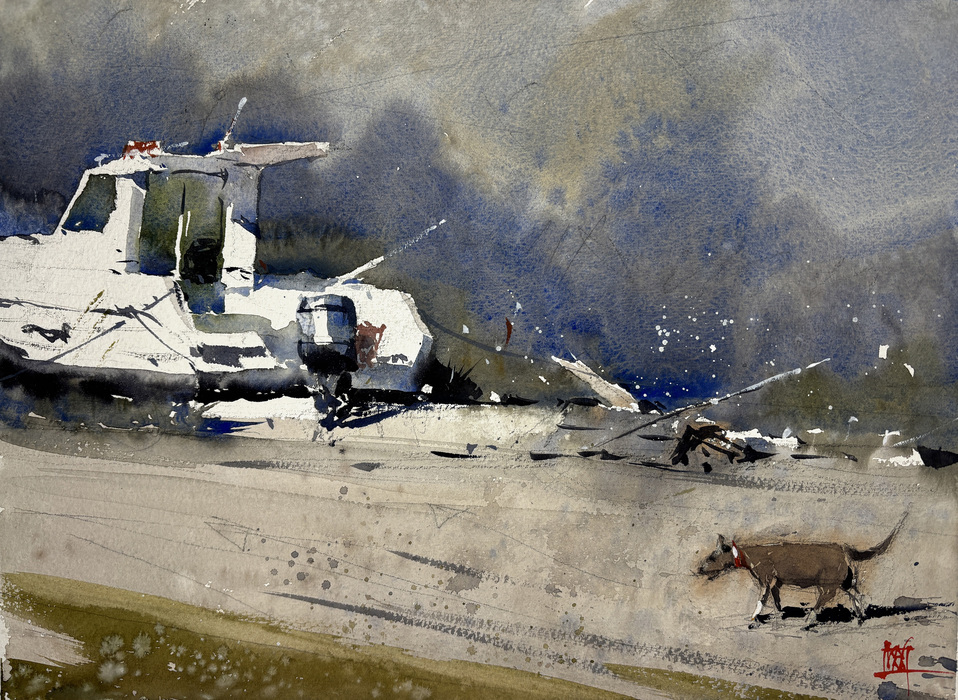
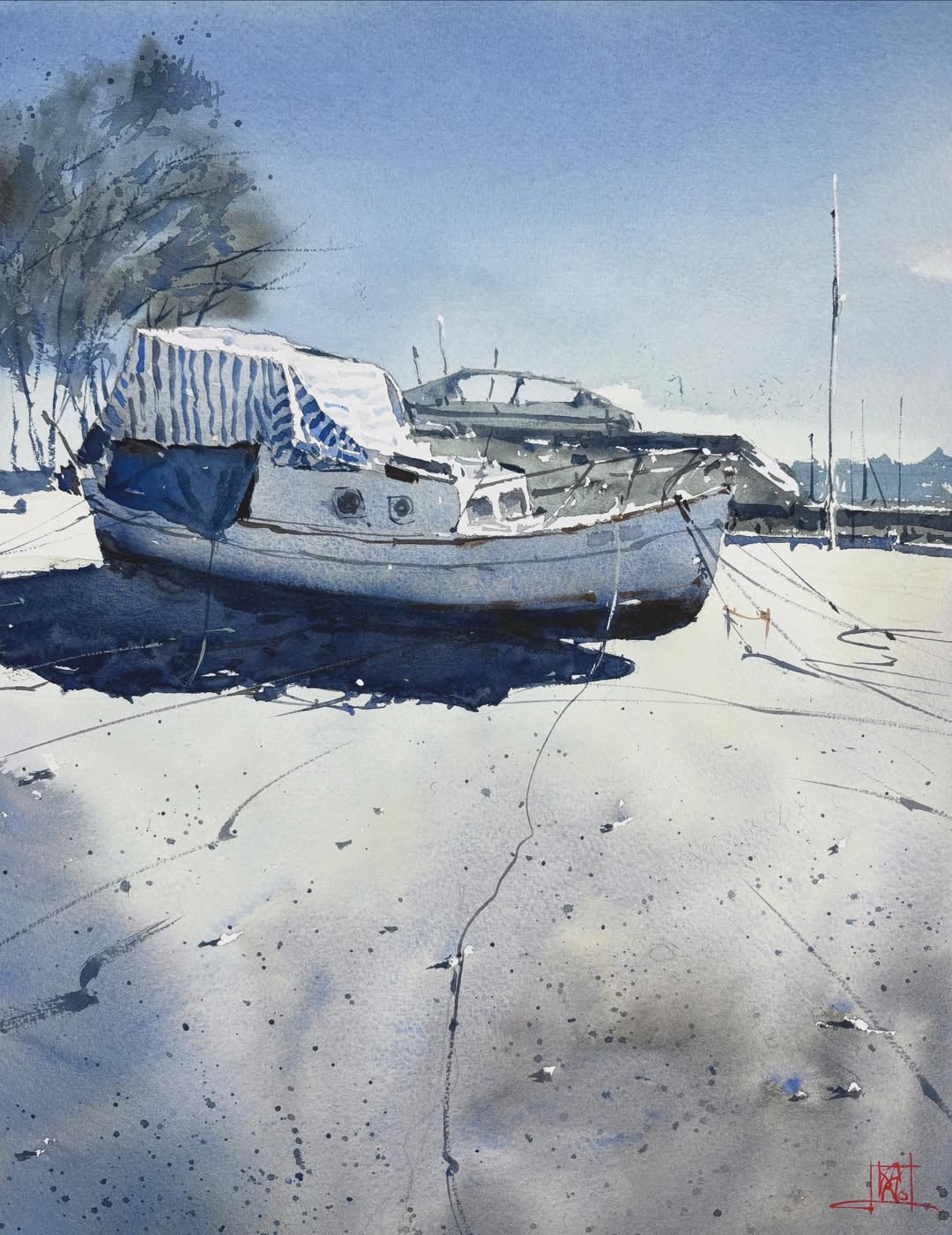
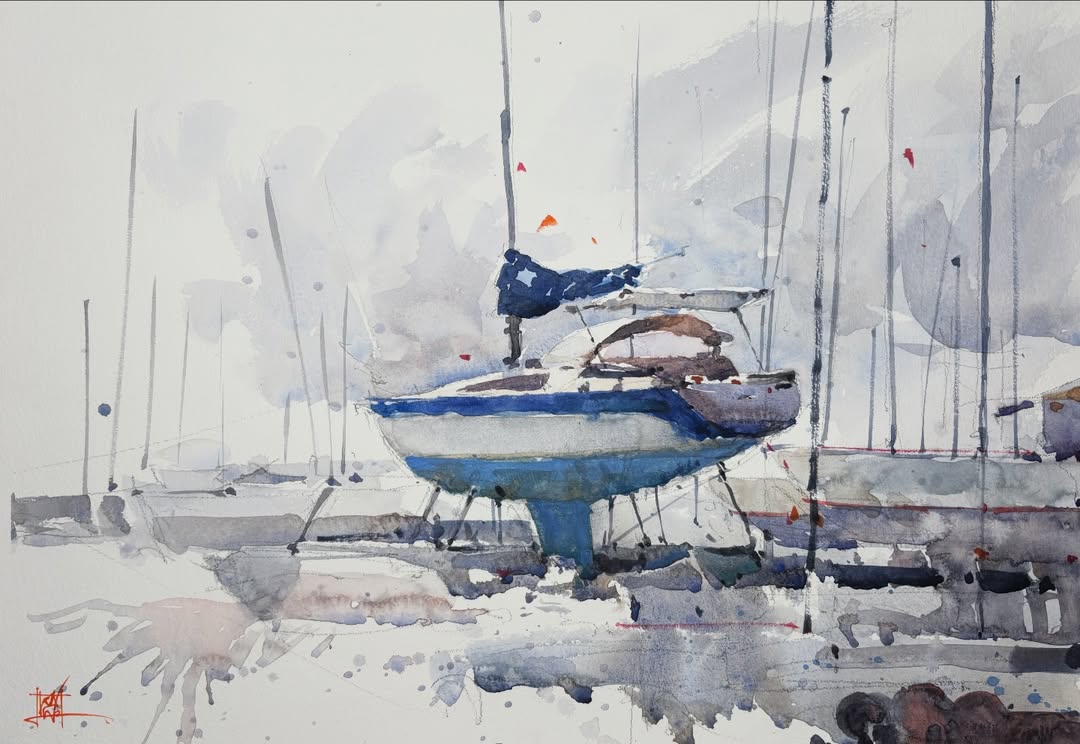
Lesson 1: A Boat on the Tagus River
Atmosphere, focal point, reduced palette from the first wash
46 min

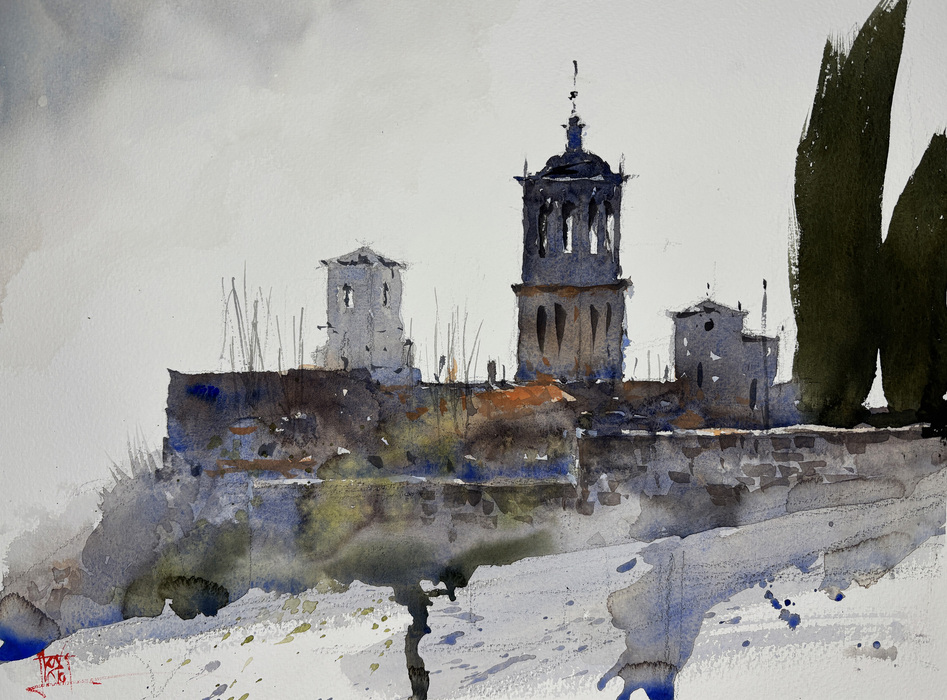
Lesson 2: Spanish Landscape
Reading light, simplifying shapes, color temperature
35 min

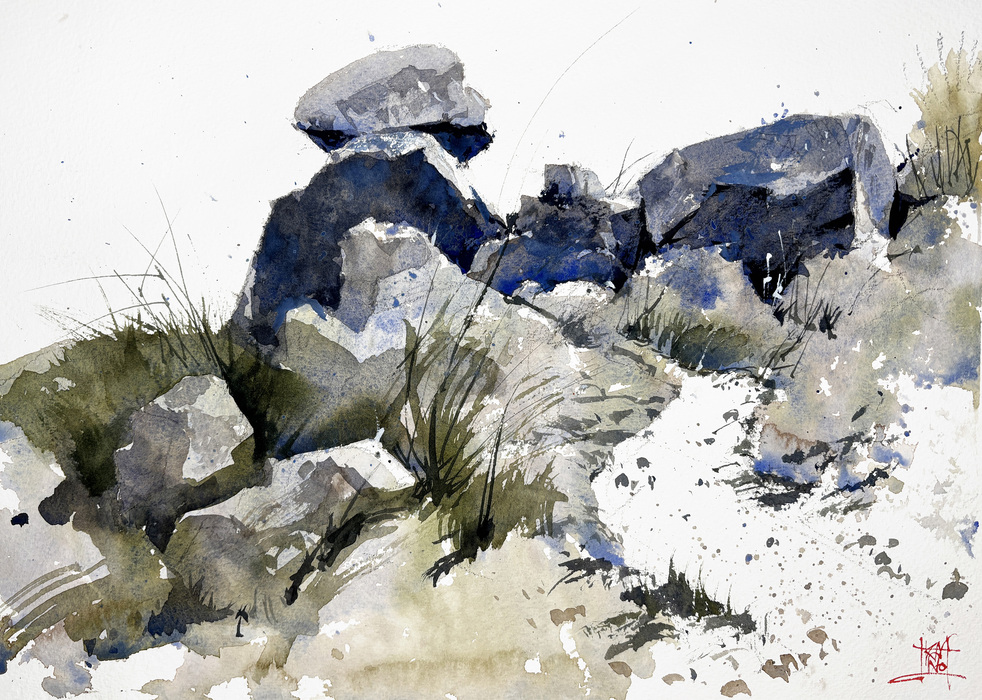
Lesson 3: Rocks: Silent Witnesses
The most abstract project: shape, value, color harmony
41 min

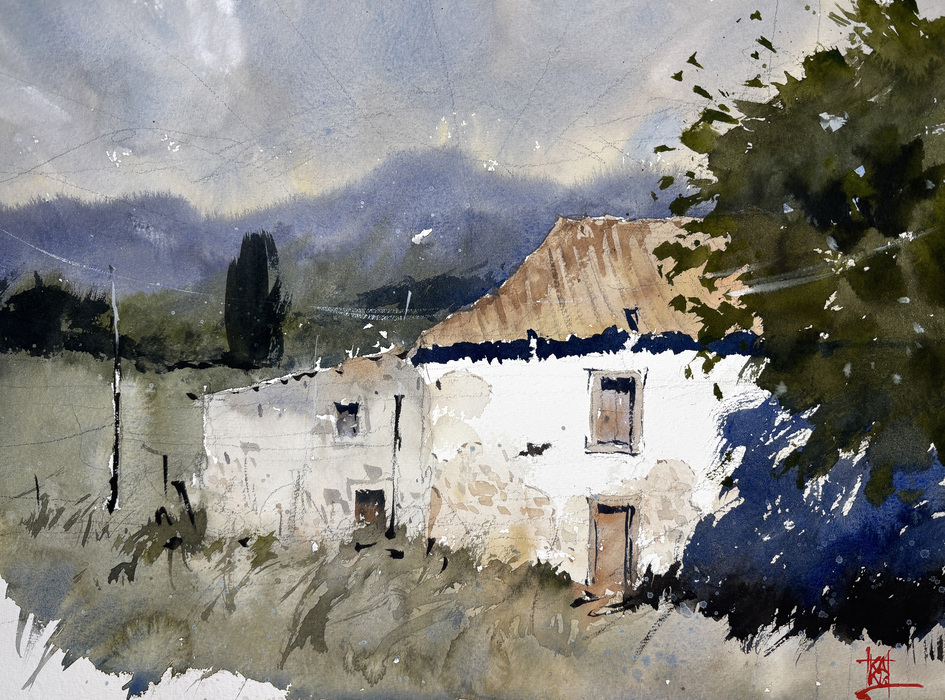
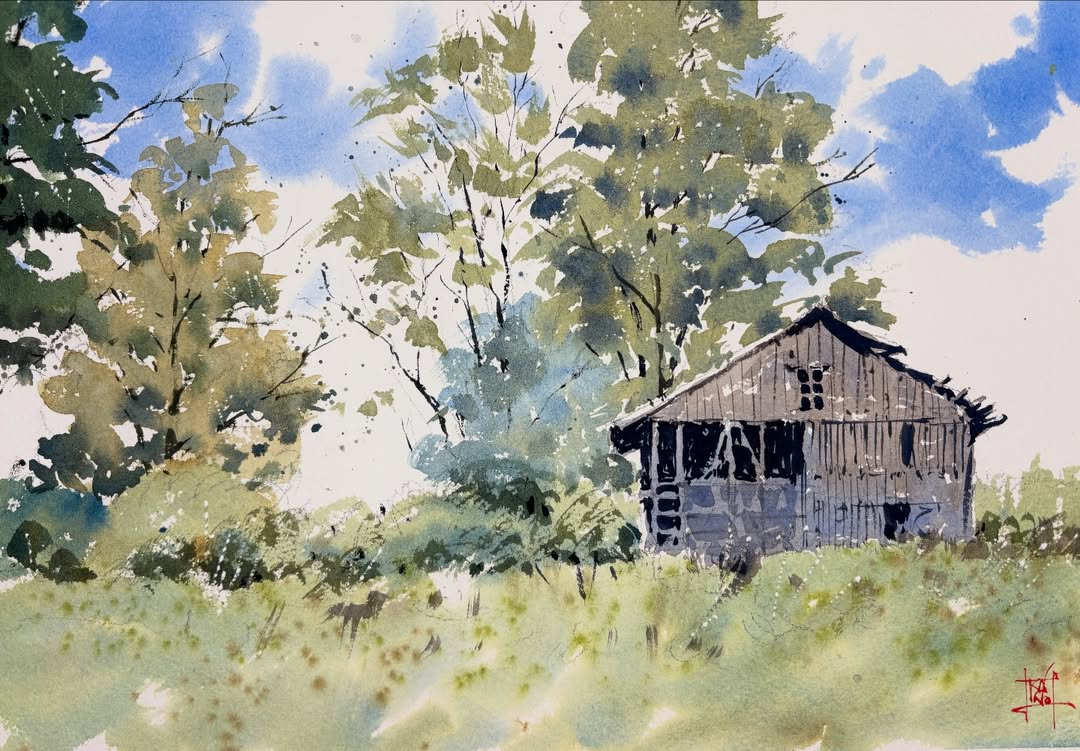
Lesson 4: An Old Abandoned House
The most compositional lesson: what to keep, what to remove, what to invent
34 min

Conclusion
Summary of techniques learned, creative task and feedback giving.
This Is What You Will Paint
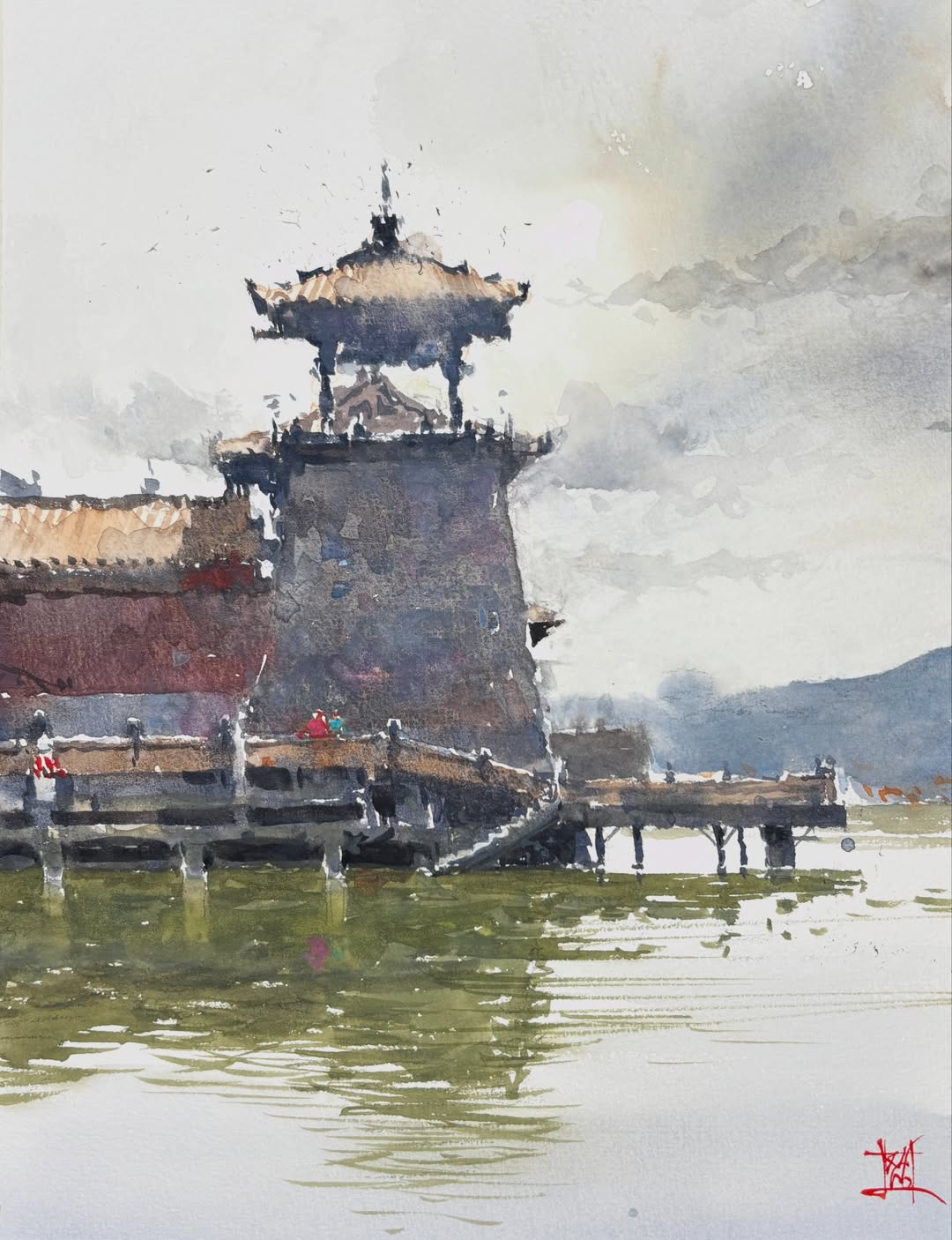
4 paintings. Each one brings a different subject, a different skill.


André's Method
- André thinks in observations before he thinks in brushstrokes.
- He reads the scene first. Where does the light come from? Why does this shadow sit on that wall? Why does the reflected light from one wall appear on another? He teaches you to study all of this before painting.
- "Never use every color, all colors in your palette. Choose just five colors, no more. The fewer colors make you more confident to harmonize colors." — André Kano
- His composition comes from ikebana: simplicity, focal point placement, minimal elements. His mother practiced ikebana, and that early influence shaped how he builds every painting.
- "I love to paint with simple motifs. I love to put the focal point in certain areas on the paper. I don't like to paint many details, many elements in my work. Just simple things." — André Kano

Support and feedback
During your studies, you receive personal feedback from professionals and the support of a creative community of like — minded people - learning becomes easier, more inspiring and more interesting.
Get individual written feedback on your paintings
- 4 detailed reviews of your final paintings + 1 creative task within the first 75 days.
- Professional feedback from a curator - Olga Karlsson (Premium plan)
- Expert critique from an academically trained fine artist.
Join our international and artistic community
- Connect with like-minded artists, share advice and feedback.
- Join daily discussions on drawings and art-related topics.
- Enjoy a welcoming space moderated by our Community Manager and Support Team.

Certificate of completion for Premium Plan
Upon completion of the course for the students of Premium plan we issue a certificate. The certificate could be used as a proof of your qualification's upgrade at work (if it is related to arts) and for your private affairs as a recognition of your mastery in painting.

Meet Your Instructor
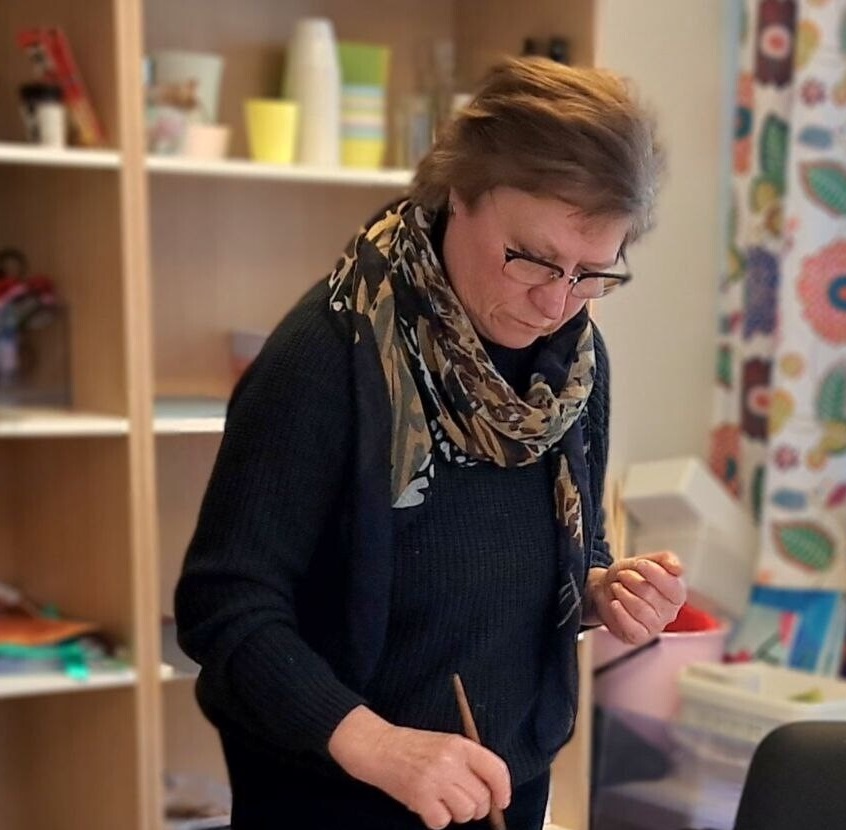
André Kano

"I practiced every day. Every day. Making one, two, three works per day. Sometimes four." — André Kano
- Rockwell International Brand Ambassador Board member
- AAPOR (Portuguese Watercolor Association)
- Country Leader for Portugal Fabriano in Acquarello
- Guest artist in 10+ countries: Switzerland, China, Italy, Spain, Morocco, France, Turkey, Luxembourg, Brazil, Portugal
- Multiple national and international awards
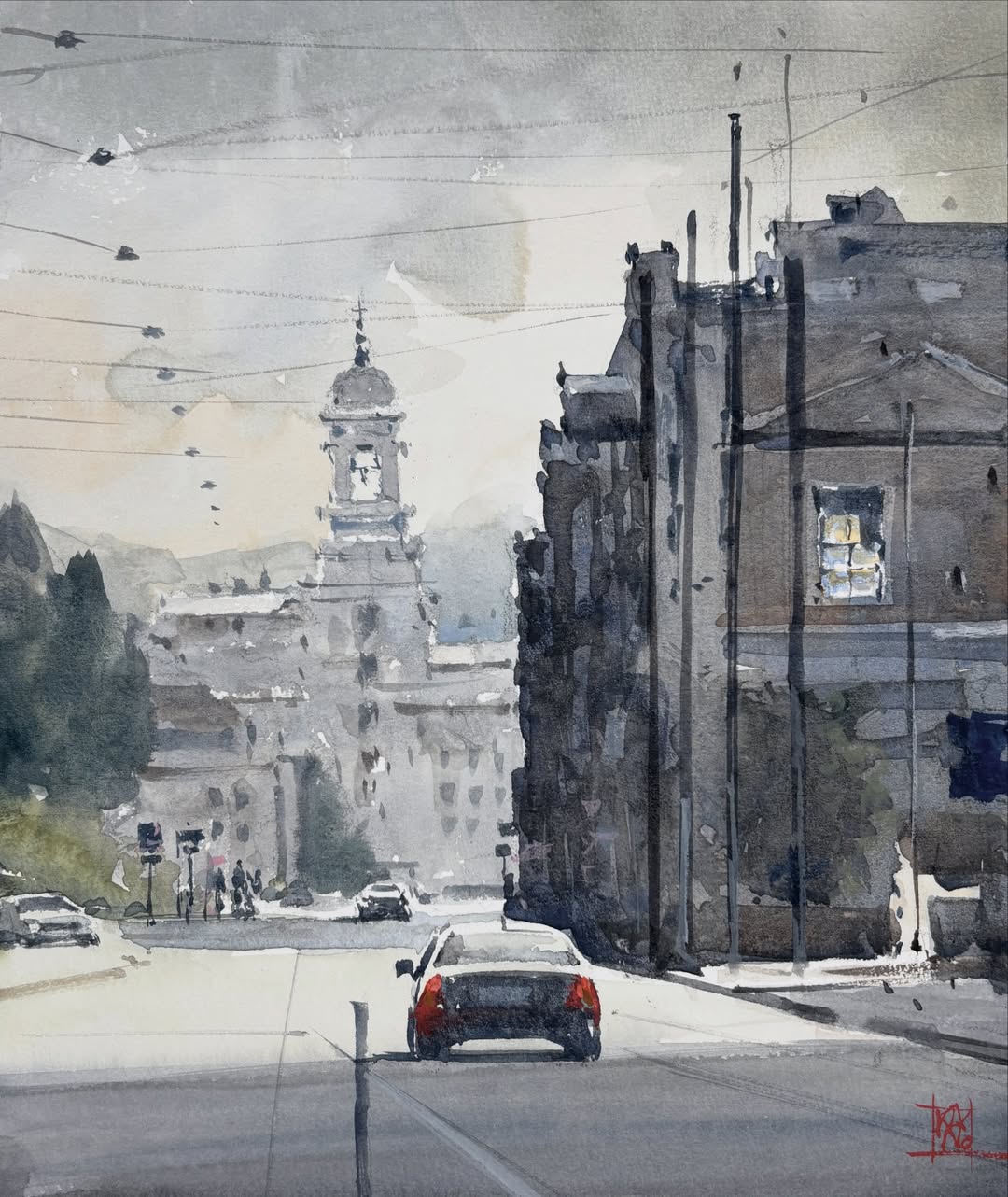
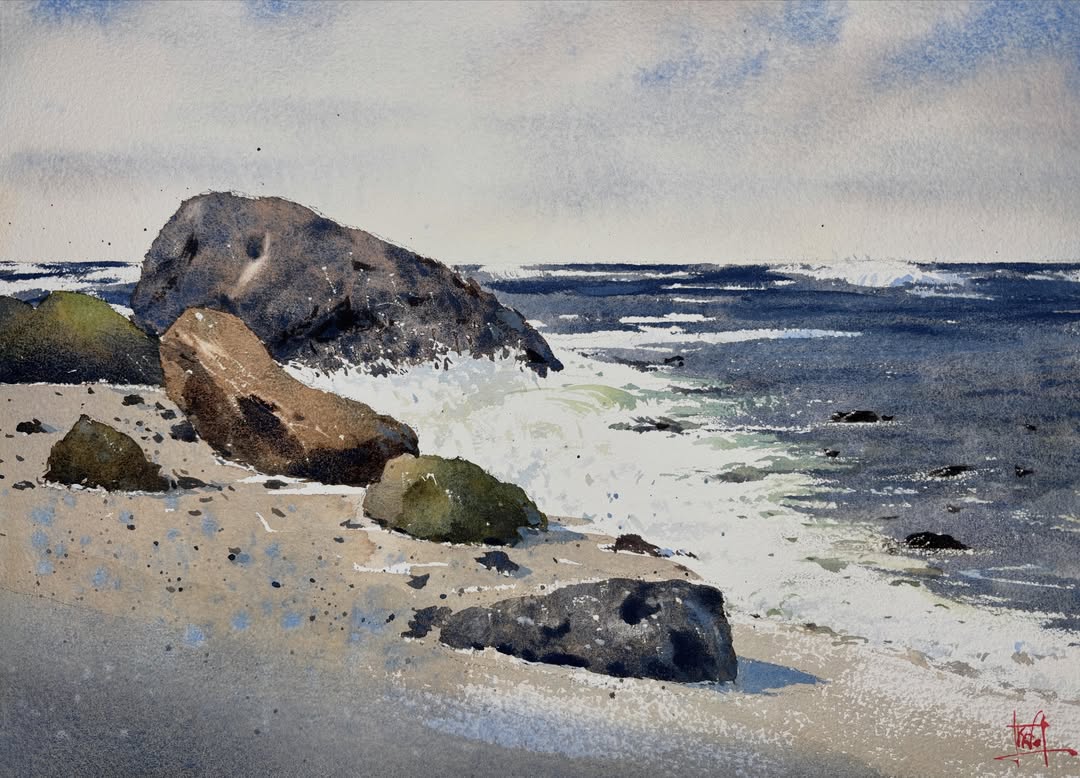
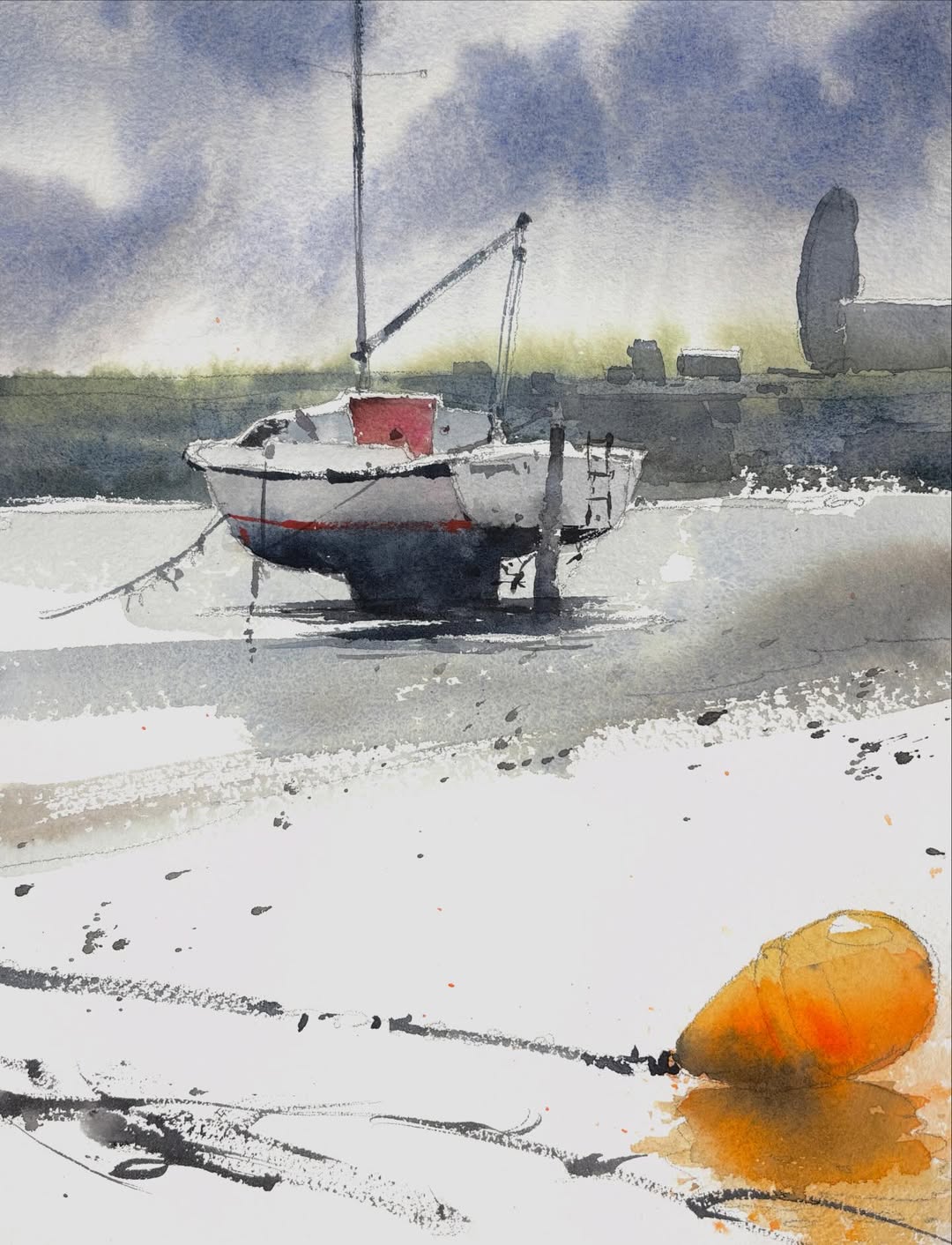
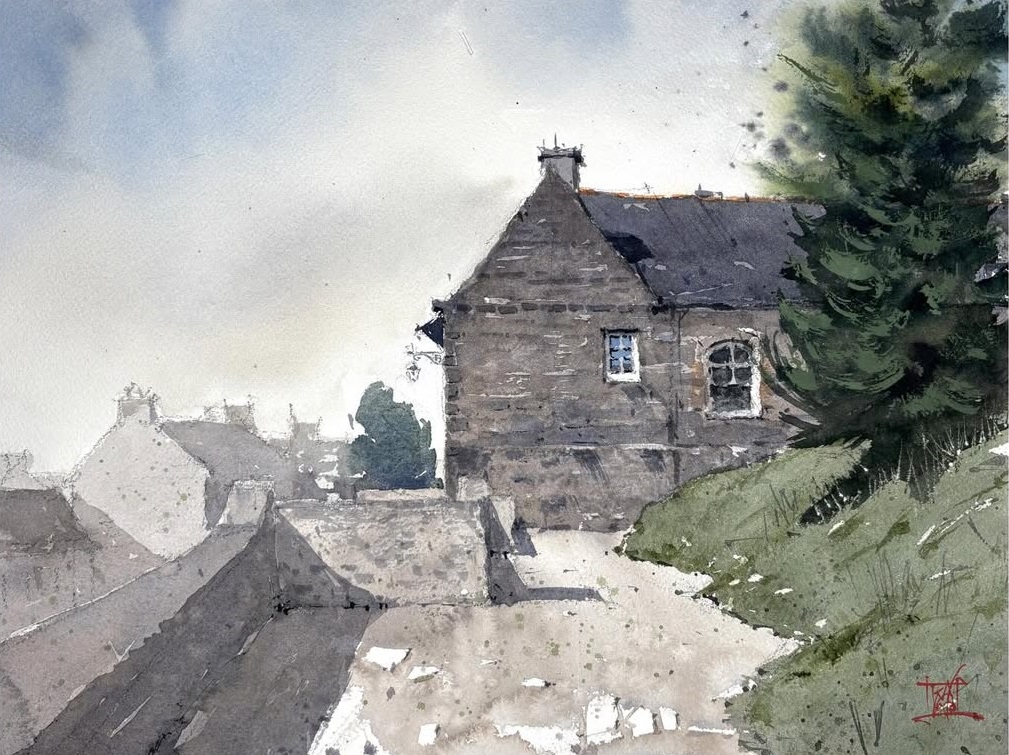
What you will achieve
Observation as a working skill
You read light, shadow, volume, and perspective before you pick up the brush. This becomes your starting point for every painting
A five-color palette you trust
You choose the right colors to mix and get the result you need. No more wrong combinations, no more mud
Composition with clear hierarchy
You place the focal point with intention. You know what to keep and what to remove
Interpretation instead of reproduction
You add, remove, and transform elements in a scene. You paint your reading, not a copy of the phot
Four finished paintings
River boat, Spanish landscape, rocks, rural architecture. One method, four applications
lesson sample
CHOOSE YOUR PLAN
Plan
Standard
- 4 lessons (total 2,5h)
- 4 final watercolor scenes
- 24/7 access from any location at your own pace
- LIFETIME access to the video lessons
- Access to the moderated students community on WhatsApp
- Final project (your own painting)
Bonus
- 30 ArtiCoins
Plan
Premium
- 4 lessons (total 2,5h)
4 final watercolor scenes
- 24/7 access from any location at your own pace
- LIFETIME access to the video lessons
- Access to the moderated students community on WhatsApp
- Final project (your own painting)
- Individual feedback from a professional curator on each of the 4 paintings + 1 creative task within 75 days
- Certificate of completion
Bonus
- 40 ArtiCoins
Plan
Standard
- 4 lessons (total 2,5h)
- 4 final watercolor scenes
- 24/7 access from any location at your own pace
- LIFETIME access to the video lessons
- Access to the moderated students community on WhatsApp
- Final project (your own painting)
Bonus
- 30 ArtiCoins
Plan
Premium
- 4 lessons (total 2,5h)
4 final watercolor scenes
- 24/7 access from any location at your own pace
- LIFETIME access to the video lessons
- Access to the moderated students community on WhatsApp
- Final project (your own painting)
- Individual feedback from a professional curator on each of the 4 paintings + 1 creative task within 75 days
- Certificate of completion
Bonus
- 40 ArtiCoins
You Have No Risks — We Support You!
100% guarantee
In case after 1-2 lessons of the course within the first week, you realize that using our approach you cannot create a painting, you will get your money back! *within 14 days after payment
Freeze for Premium plan
If the start date is not convenient we freeze the course for as long as you want (1 time free of charge)
Freedom and Mobility
Access to the lessons at any time. Go through the lessons at a comfortable pace. Watch the lessons on your smartphone, tablet, or laptop

Materials for the COURSE
You may already have what you need.
Paper: Magnani 300g, fine grain, 100% cotton, 28x38 cm
Brushes: Chinese round (goat hair, No. 12), Russian synthetic (No. 8), Da Vinci Petit Gris Pure (No. 4)
Pencil: 7B Colors: Cobalt Blue, Ultramarine Blue, Yellow Ochre, Olive Green, Titanium White, Burnt Umber, Burnt Sienna, Pyrrole Orange, Neutral Tint
Extras: Water reservoir, spray bottle, rigid base with adhesive tape
Lots of flexibility. No need for exact items.
FAQ
Still have questions?
Our team is here to help. Not sure which plan is right for you? Just reach out — we'll guide you in a few minutes.
Contact us
You look at a landscape and think: I want to paint that.
Then you notice the light shifting, the shadows layering, the colors you cannot name, and you think: where do I even start?
Start by observing. Then pick five colors. Then paint what you see, not what the camera recorded.
"Sometimes I have to paint with the heart, not with the mind. Not mental, but more intuition." – André Kano