

A NEW COURSE BY SVETLANA CAMERON
The Living Face:
Classical Portrait in Trois Crayons
Go beyond likeness: learn to draw a portrait that looks alive
Svetlana Cameron’s own method inspired by the Renaissance three-colours drawings and refined over more than twenty years of commissioned portraiture
Build realistic skin from black, sanguine, and white on toned paper, because the paper itself works as your fourth color
Place the head with control points, so proportions and likeness hold before you add a single detail
Lay down light and shadow first, so every feature sits in one convincing form
5 video lessons. About 3.5 hours. Subtitles in 6 languages. Lifetime access
A NEW COURSE BY SVETLANA CAMERON
The Living Face:
Classical Portrait in Trois Crayons
Go beyond likeness: learn to draw a portrait that looks alive
Svetlana Cameron’s own method inspired by the Renaissance three-colours drawings and refined over more than twenty years of commissioned portraiture
5 video lessons. About 3.5 hours. Subtitles in 6 languages. Lifetime access
At a glance
Trois crayons is a 500-year-old drawing technique art schools stopped teaching.
Svetlana Cameron has spent more than twenty years bringing it back
Svetlana Cameron · ARC Associate Living Master (Art Renewal Center, USA) · Best in Show, UK national exhibition of Graphic Fine Art, Mall Galleries, London, 2026 · works in the UK national collection on Art UK
«Portraiture is a unique genre where an artist needs to be a highly skilled painter and a good psychologist» — Svetlana Cameron
Holbein and the Clouets drew with three natural chalks, red, black, and white, on toned paper. Svetlana works with their modern equivalent, Conté crayons, and takes the method further. Her drawings are finished portraits with realistic texture and fine detail. In this course, you will learn to see the face as light and shadow first, then build the skin in thin layers that let the paper show through.
Is this right for you?
Portrait drawing tends to break in the same four places. Find yours
You draw each feature with care, small errors add up, and the likeness slips away. You need control points that fix proportions before any detail goes in
You add more color, then more white, and the face goes dull. You need to know how a few layers and the tone of the paper build skin together
Each feature works alone, and the whole face never holds together. You need a plan of light and shadow before the detail
On the instructor's reference it works. On your photo the light is wrong and you do not know why. You need to know what makes a reference worth drawing, and how to choose your own
Svetlana’s approach
Svetlana does not color the skin. She lets the paper do it
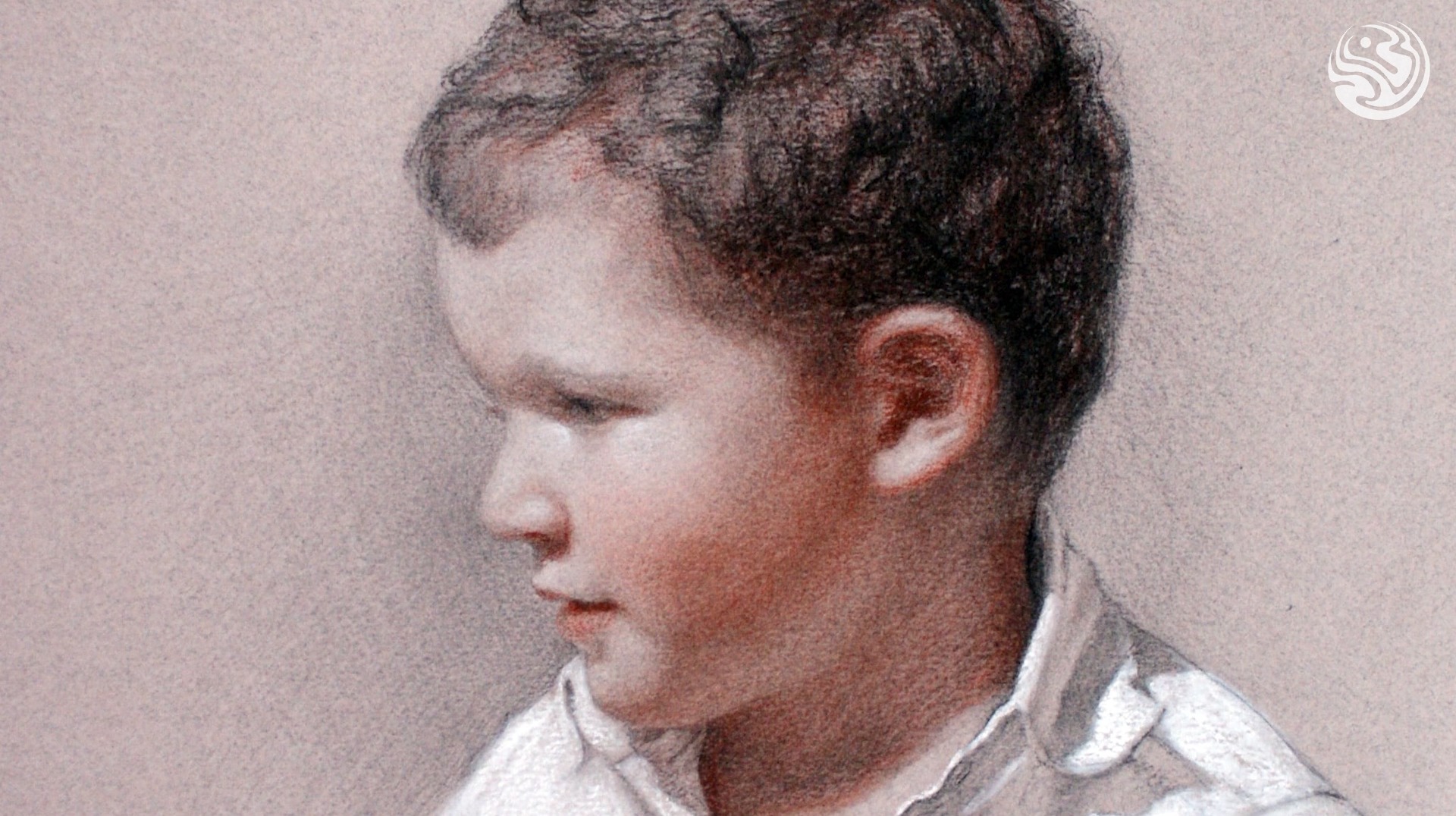
The toned paper stays visible through the whole drawing and becomes your fourth and strongest color. On a cool gray-blue sheet, the cool halftones around the eyes and mouth appear on their own, so you leave them instead of drawing them. Sanguine adds warmth, black builds the shadow, white catches the light
Before any of that, she divides the face into two masses, light and shadow, and copies their shapes exactly. That is the chiaroscuro principle of the Renaissance masters,and it gives the face its volume and its likeness at the same time.
«My drawing method is inspired by the Renaissance ‘trois crayons’ technique which I have re-interpreted, expanded, combined with pastel, and over the years, have arrived at the style that is now associated with my name»

Course program
Each lesson is one stage of a classical portrait, in the order Svetlana works in her studio
Introduction
Svetlana introduces trois crayons, her materials, and what sets her finished portraits apart from the Renaissance sketches they grew from
10 min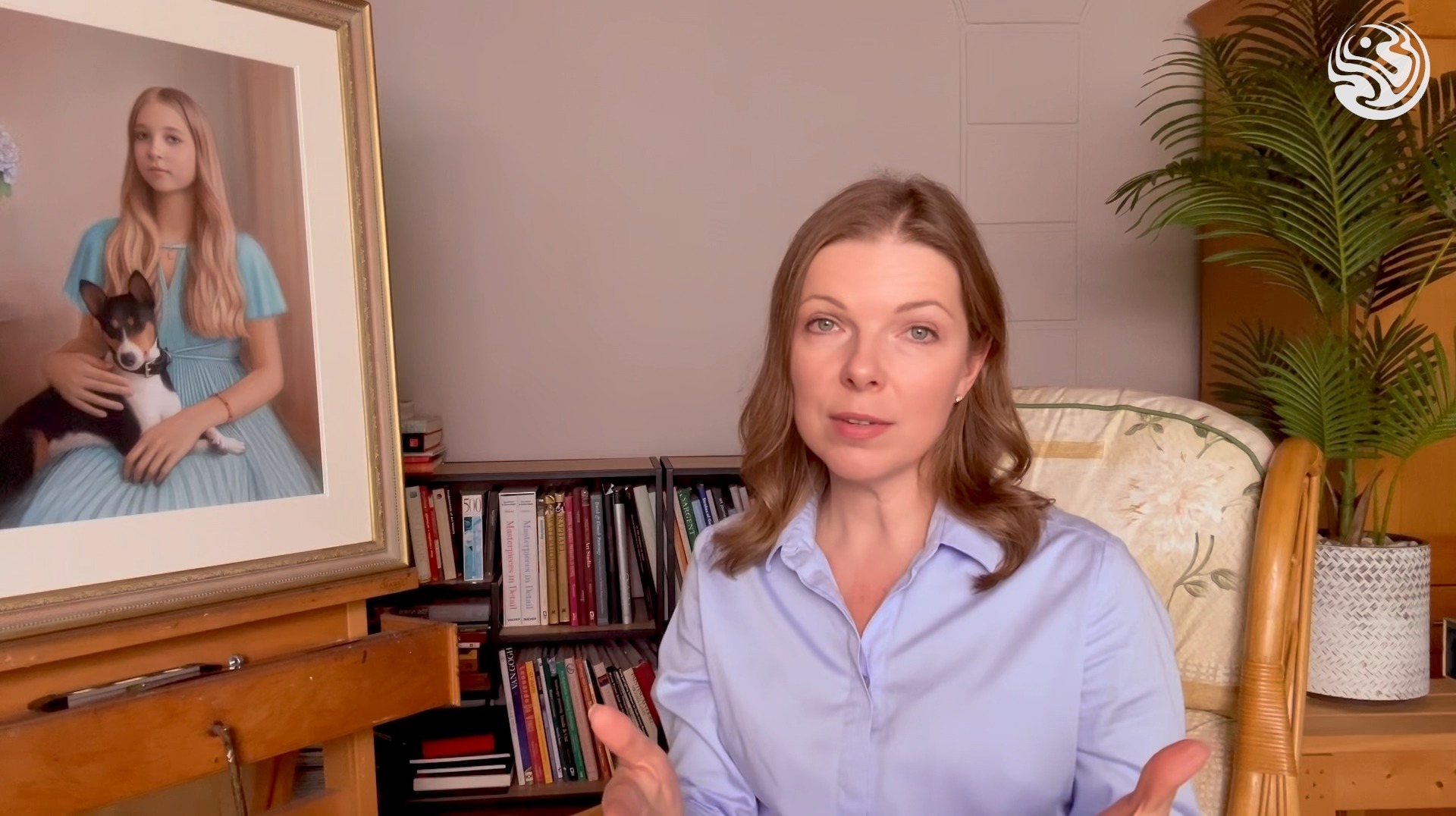
Lesson 1. Reference and Blocking-in
You start from the photo reference and block in the head freehand. Svetlana shows the control points she uses, so the likeness holds before any detail goes in
45 min


Lesson 2. Value Pattern and Three-Color Foundation
You map light and shadow, then layer black, sanguine, and white over the toned paper. This is the core of the method and the stage where the skin starts to look real
50 min


You model the forehead, brows, and eyes. Svetlana explains the anatomy as she draws and shows the mistakes that flatten an eye, such as drawing the lid as a line or adding too much white
35 min

You build the middle and lower face with the same layering, and Svetlana explains the anatomy behind each shadow as you go
40 min


You draw the ear and hair, two areas that often spoil a portrait, and bring the drawing to a finish. Then you check your likeness with Svetlana's self-critique checklist
25 min


How to pose a sitter, set the light, and choose the angle, so you can photograph a reference of your own for your next portrait
LESSON SAMPLE
Watch the skin appear, layer by layer, from three crayons and the color of the paper
What you will draw
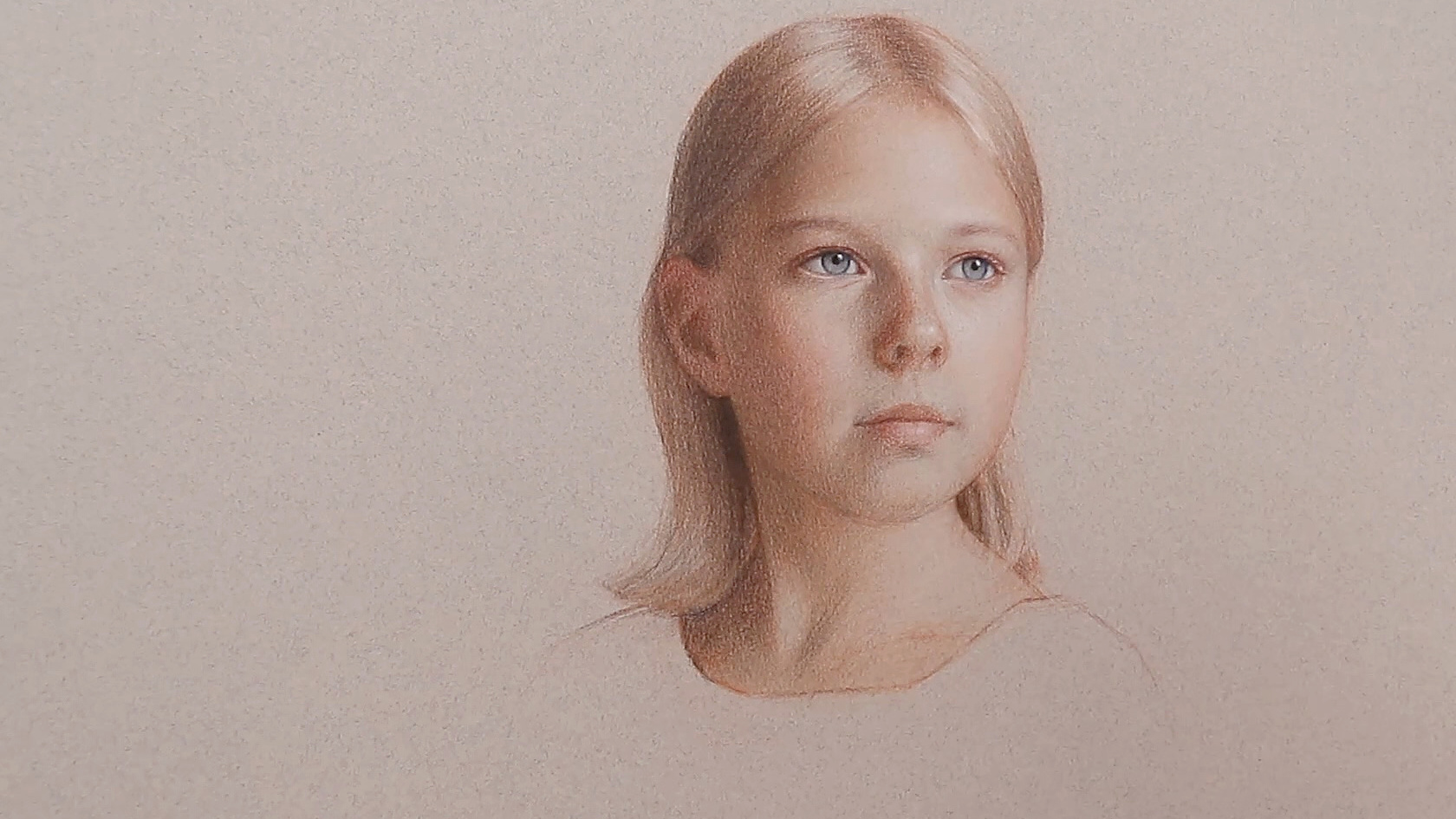
Look at the skin up close.
Every tone in this portrait comes from three crayons and the paper underneath

Eyes and Upper Face
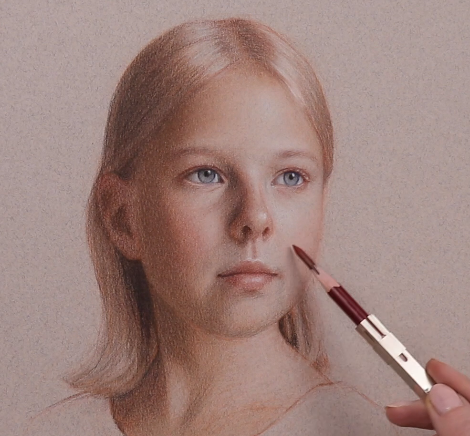
Nose, Mouth and Chin
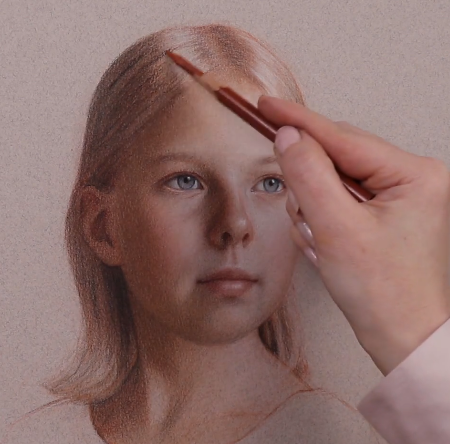
Hair, Ears and Finishing
Svetlana Cameron.
The portrait you draw in this course, from the first line to the last layer
Meet Your Instructor:
Svetlana Cameron

- Fellow of the Royal Society of Arts and member of the Society of Graphic Fine Art, UK
- Official portraits for the Parliament of the Isle of Man and the Royal Regiment of Artillery, with works at the Pontifical Beda College in Rome
- International Prize Leonardo da Vinci, Florence, 2022
- Solo exhibitions in London, including D Contemporary Gallery in Mayfair and the Reform Club on Pall Mall
- Head of Jury at the We Are the World international competition of children's art, London, 2023 and 2024
- Trained in the methods of the Old Masters at the Florence Academy of Art courses in Italy


WHAT WILL YOU ACHIEVE
Build skin from three crayons
You layer black, sanguine, and white so the toned paper reads as living skin
Make the paper work for you
You choose the tone and temperature of the sheet and let it carry part of the color
Place the head with confidence
You use control points to set proportions before you commit to any detail
Model form with light and shadow
You read the face as two masses and copy their shapes, so volume and likeness come together
Check your own likeness
You find and fix what is off with Svetlana's self-critique checklist, without waiting for someone else's eye
Start from your own reference
You set the light and pose with a live sitter and photograph a reference worth drawing
Support and feedback
Premium & Elite Personal Feedback
- You're not drawing alone. At every stage of the course, you'll receive written feedback on your portrait: what's working and what to improve
- You'll also get a final review of the portrait you create from your own reference (creative task)
- Premium: Feedback from curator Olga Karlsson
Elite: Personal feedback from Svetlana Cameron herself - Both plans include 75 days of feedback from the date of payment, a one-time free pause of this period
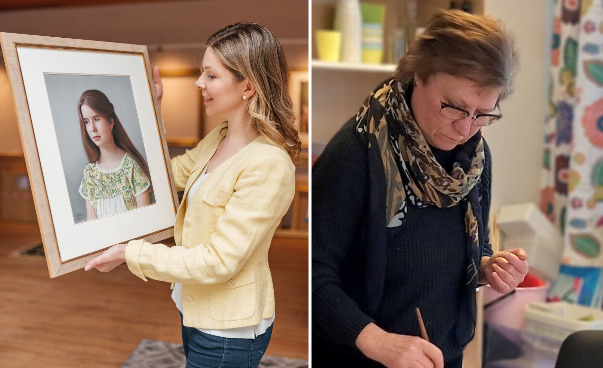
Join our international and artistic community
- Connect with like-minded artists, share advice and feedback
- Join daily discussions on drawings and art-related topics
- Enjoy a welcoming space moderated by our Community Manager and Support Team

Certificate of completion for Premium & Elite Plan
Upon completion of the course for the students of Premium & Elite plan we issue a certificate.
The certificate could
be used as a proof of your qualification's upgrade at work (if it is related to arts) and for your private
affairs as a recognition of your mastery in painting.

CHOOSE YOUR PLAN
Standard Plan
79 USD 129 USD
Perfect for artists who want to learn Svetlana’s classical portrait method at their own pace
Program «The Living Face: Classical Portrait in Trois Crayons»:
- Introduction to trois crayons and materials
- 5 video lessons (about 3.5 h): from reference and blocking-in to the finished portrait
- Written lesson: working from life and taking your own reference
- Likeness self-check list
- Subtitles in 6 languages
- LIFETIME access to the video lessons
- Access to the moderated students community on WhatsApp
Premium Plan
119 USD 189 USD
For artists who want written feedback on their portrait from a curator
Everything in the Standard plan plus:
- Written feedback from professional curator Olga Karlsson at every stage of the course portrait and on your final creative portrait (final version only)
- Feedback is available for 75 days from the date of payment, with one free freeze
- Certificate of completion
Elite Plan
159 USD 259 USD
For artists who want Svetlana’s personal feedback on their portrait
Everything in the Standard plan plus:
- Personal written feedback from Svetlana Cameron at every stage of the course portrait and on your final creative portrait (final version only)
- Feedback is available for 75 days from the date of payment, with one free freeze
- Certificate of completion
* Only 10 places
Standard Plan
69 EUR 112 EUR
Perfect for artists who want to learn Svetlana’s classical portrait method at their own pace
Program «The Living Face: Classical Portrait in Trois Crayons»:
- Introduction to trois crayons and materials
- 5 video lessons (about 3.5 h): from reference and blocking-in to the finished portrait
- Written lesson: working from life and taking your own reference
- Likeness self-check list
- Subtitles in 6 languages
- LIFETIME access to the video lessons
- Access to the moderated students community on WhatsApp
Premium Plan
104 EUR 165 EUR
For artists who want written feedback on their portrait from a curator
Everything in the Standard plan plus:
- Written feedback from professional curator Olga Karlsson at every stage of the course portrait and on your final creative portrait (final version only)
- Feedback is available for 75 days from the date of payment, with one free freeze
- Certificate of completion
Elite Plan
139 EUR 225 EUR
For artists who want Svetlana’s personal feedback on their portrait
Everything in the Standard plan plus:
- Personal written feedback from Svetlana Cameron at every stage of the course portrait and on your final creative portrait (final version only)
- Feedback is available for 75 days from the date of payment, with one free freeze
- Certificate of completion
* Only 10 places

• FREE BONUS WITH ANY PLAN
ART TALK RECORDING BY SVETLANA CAMERON
Watch Svetlana Cameron Bring a Child's Face to Life with Three Crayons
and Toned Paper
Watch Svetlana Bring a Child's Face to Life with Three Crayons and Toned Paper
Discover the Renaissance trois crayons technique and watch how black, sanguine, and white crayons bring warmth, depth, and life to a child's portrait on toned paper
- The full art talk recording is yours FREE with any course plan during this launch
- Lifetime Access
YOU HAVE NO RISKS, WE SUPPORT YOU
Start with the first lessons and decide for yourself
100% guarantee
If after 1 to 2 lessons within the first week this approach is not for you,
you get your money back.
* Within 14 days after payment
Freeze for Premium & Elite plan
Start date is not convenient?
We freeze the course (1 time free of charge)
Freedom and Flexibility
Access any time. Go at your pace.
Smartphone, tablet, or laptop.

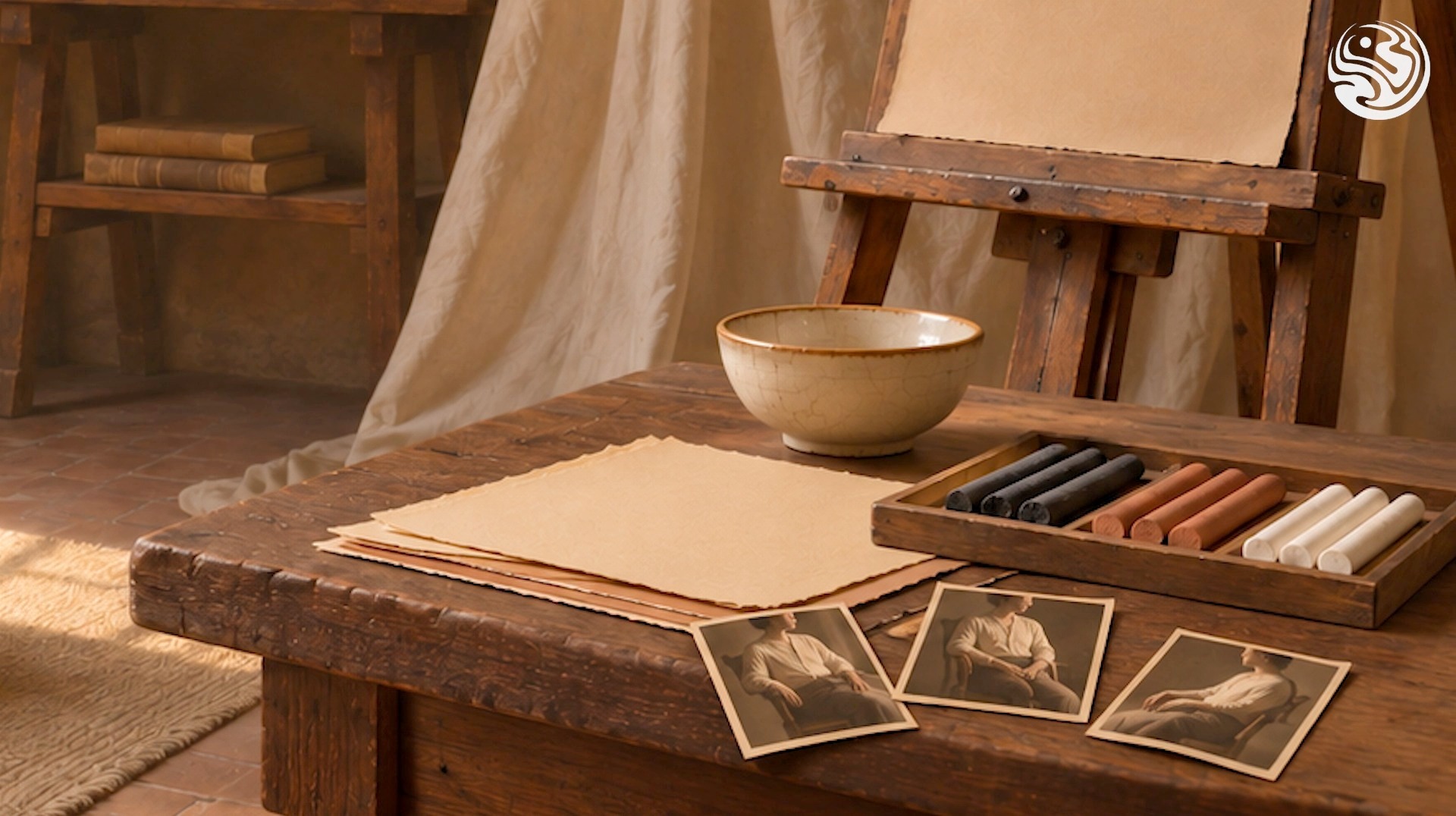
Materials for the Program
Three crayons, a sheet of toned paper, and a few simple tools. Here is Svetlana’s own set
Crayons: Conté white, Conté charcoal in several grades, Conté sanguine 610, and Derwent dark sanguine P620. She adds white pastel for the brightest accents and compressed charcoal for the deepest darks
Paper: Canson Mi-Teintes in a neutral mid-tone, for example Moonstone
Tools: an eraser, blending stumps, a fan brush
Lots of flexibility with supplies, no need for exact items!
FAQ
Still have questions?
Our team is here to help. Not sure which plan is right for you? Just reach out — we'll guide you in a few minutes.
Contact us
READY TO PAINT THE LIGHT?
You have drawn faces that looked right and still felt empty. Svetlana’s answer is the one the Renaissance masters gave: see the face as light and shadow, build the skin in layers, and let the paper carry the warmth.
«This skill of creating a certain mood and tuning in with the sitter’s emotion is even more important than the ability to re-create likeness or match colors accurately. Without it portraits will not look ‘alive’ even if the likeness is accurate» — Svetlana Cameron