

A COURSE BY KONSTANTIN STERKHOV
From Exercise to Painting:
Four Elements That Decide Whether a Watercolor Works
With the video on, it works. On your own, it doesn't. That gap isn't talent — it's four elements you've never practiced separately.
16 lessons · 4h 45min of HD video · 3 finished paintings · Lifetime access
From $89 · Launch price ends when the course starts
IS THIS YOU?
Four painters. One of them is probably you
Read these four. If one of them is you, keep scrolling
One student said it exactly:"I painted better eight years ago than I'm painting now." You've improved before, so you know what progress feels like — and this isn't it.
Here you test each element separately. That's the only way to find which one is weak.
The video plays and the painting works. The next morning you open your own reference and don't know what to do first. You've been copying decisions instead of making them.
Here you learn to name each one, so the method stays with you when the video is off.
You know what wet-on-wet is. You've read about tonal values. But in front of the paper you reach for whatever you used last time, and couldn't say why.
Here the five techniques sit side by side, labeled. Choosing becomes a decision, not a reflex.
You mix, and it turns gray. You finish, and the painting has no light in it — and nobody has ever told you exactly why.
Here you mix from primaries with a system, and learn to read tone before you pick up a brush.
The Four Elements
Materials, technique, tone, color. Every watercolor that fails has at least one of them broken — and it's rarely the one you'd guess. A painter of thirty years and a painter of three fail for the same four reasons.
Each one gets practiced on its own first. Then it gets painted.
Element One — Materials
Not a shopping list. What paper does under a second wash, what each brush leaves behind, why paint sits where it sits on the palette. You test alongside me with what you already own.
You finish with: a setup that gives you the same result twice.


Element Two — Technique
All five demonstrated side by side and labeled — you see the difference instead of reading about it. Then five thumbnails, five minutes each, where you choose under pressure.
You finish with: Sky and Shore, where all five appear in one work.


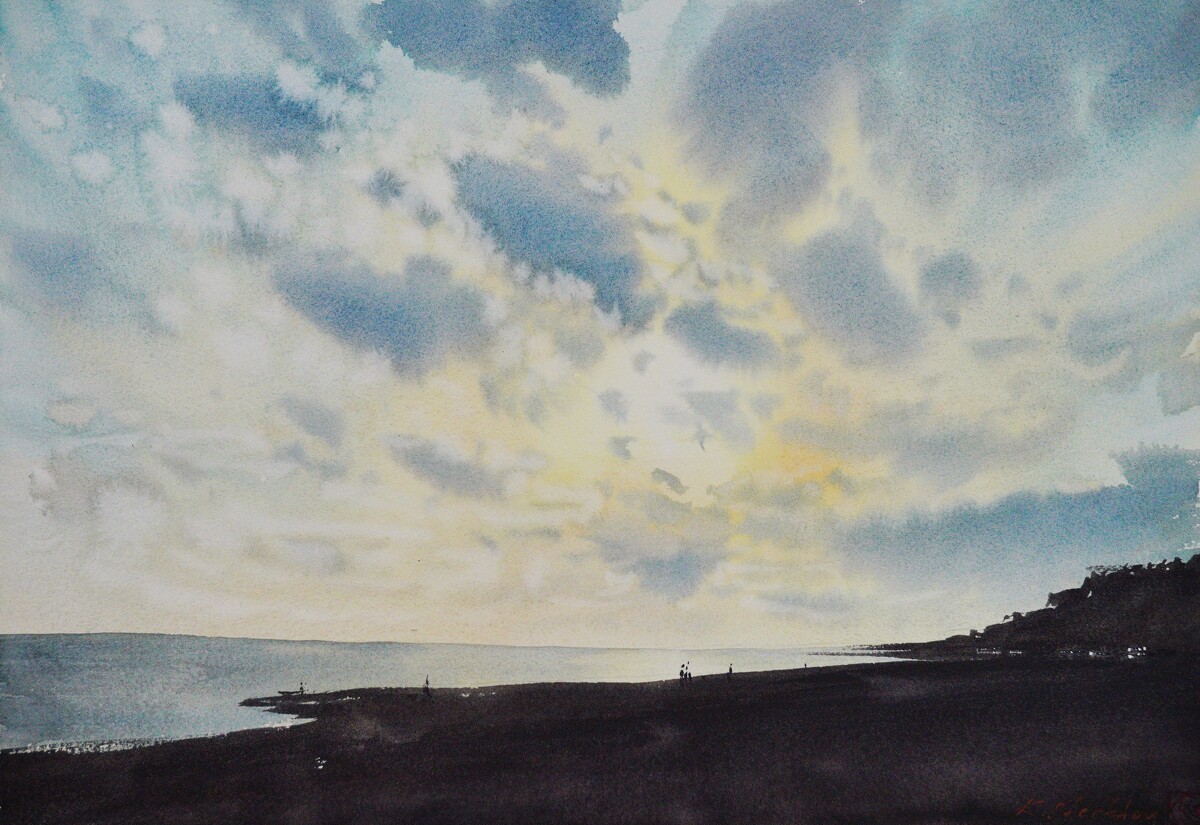
Element Three — Tone
Tone before color, on purpose. Color is the loudest thing on the paper and hides everything else — so we take it away. You learn to read a photograph as light and dark, and to tell a finished painting from a crowded one.
You finish with: Italian Landscape.


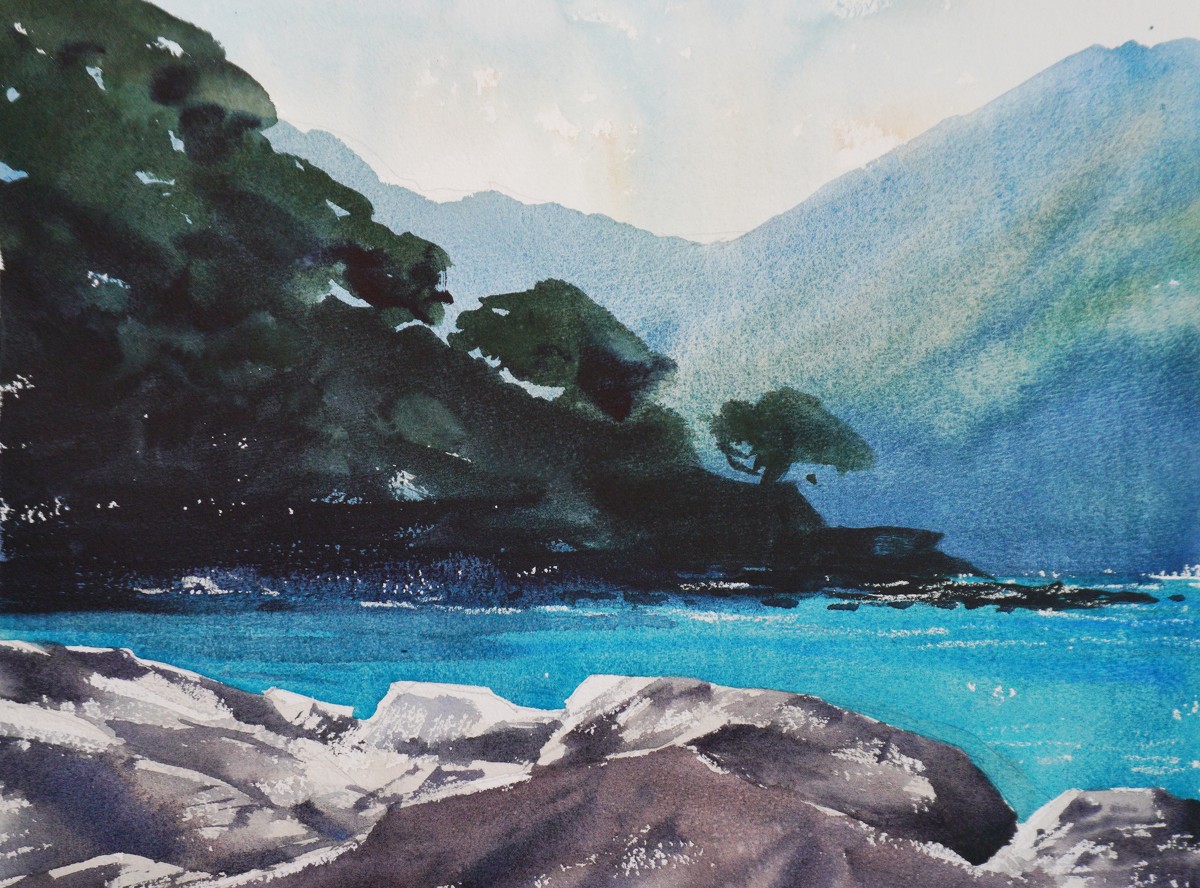
Element Four — Color
Itten's wheel, warm against cool, mixing from primaries, and what complementaries do side by side. The point isn't more pigments — it's fewer, chosen deliberately.
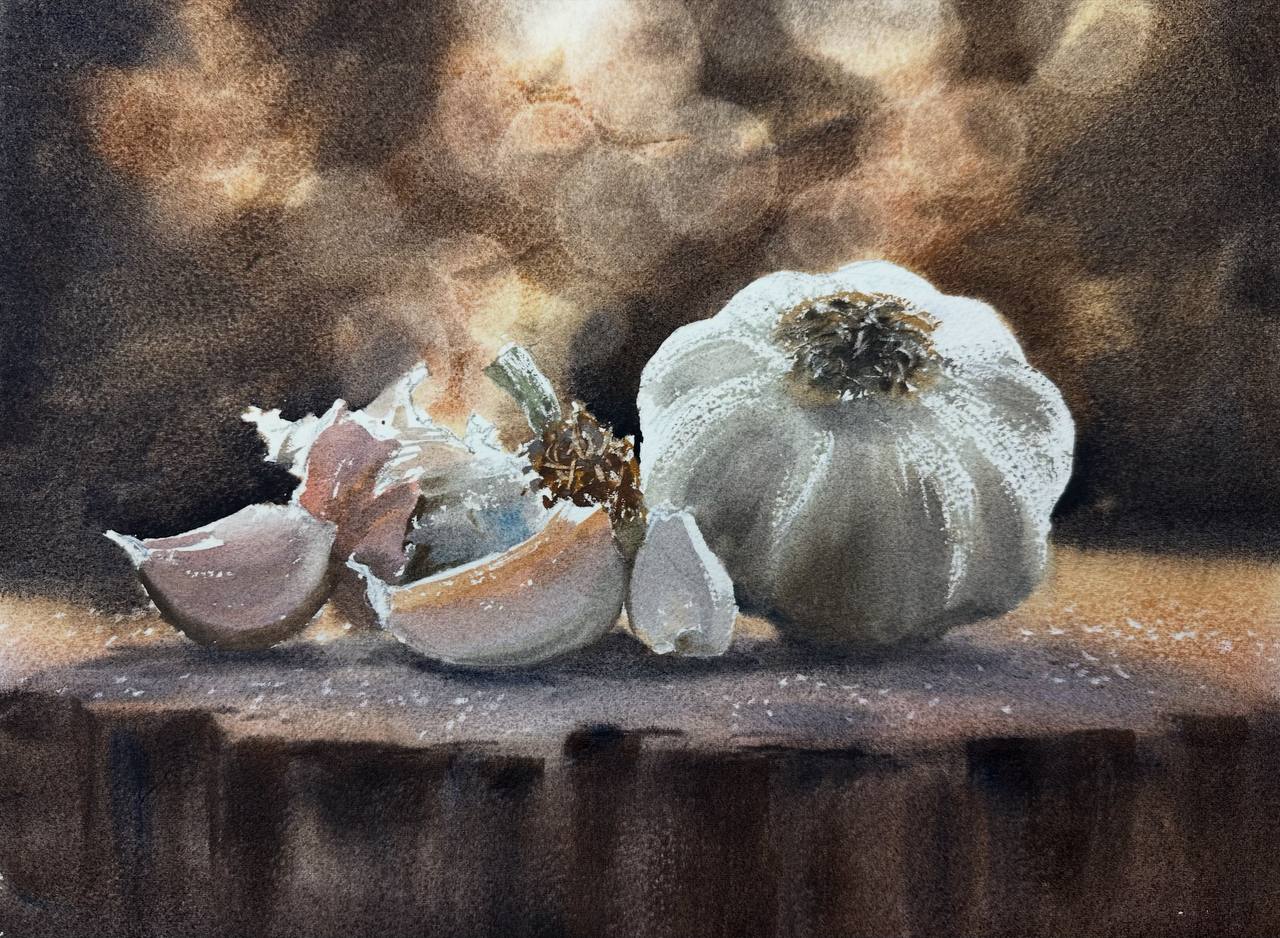
You finish with: Flower Composition, built on one color relationship you can reuse.


Three paintings at the end — but they're the proof, not the point. What you keep is the way of working.
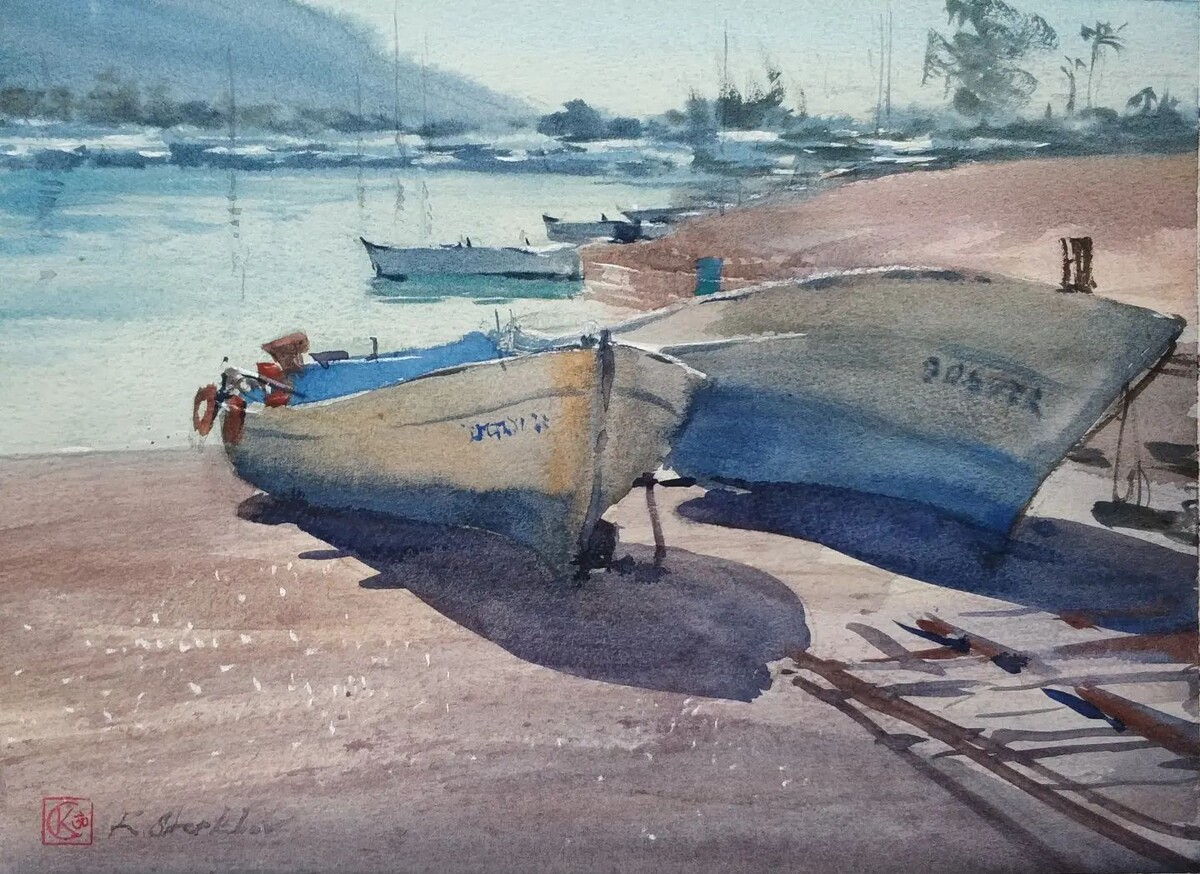
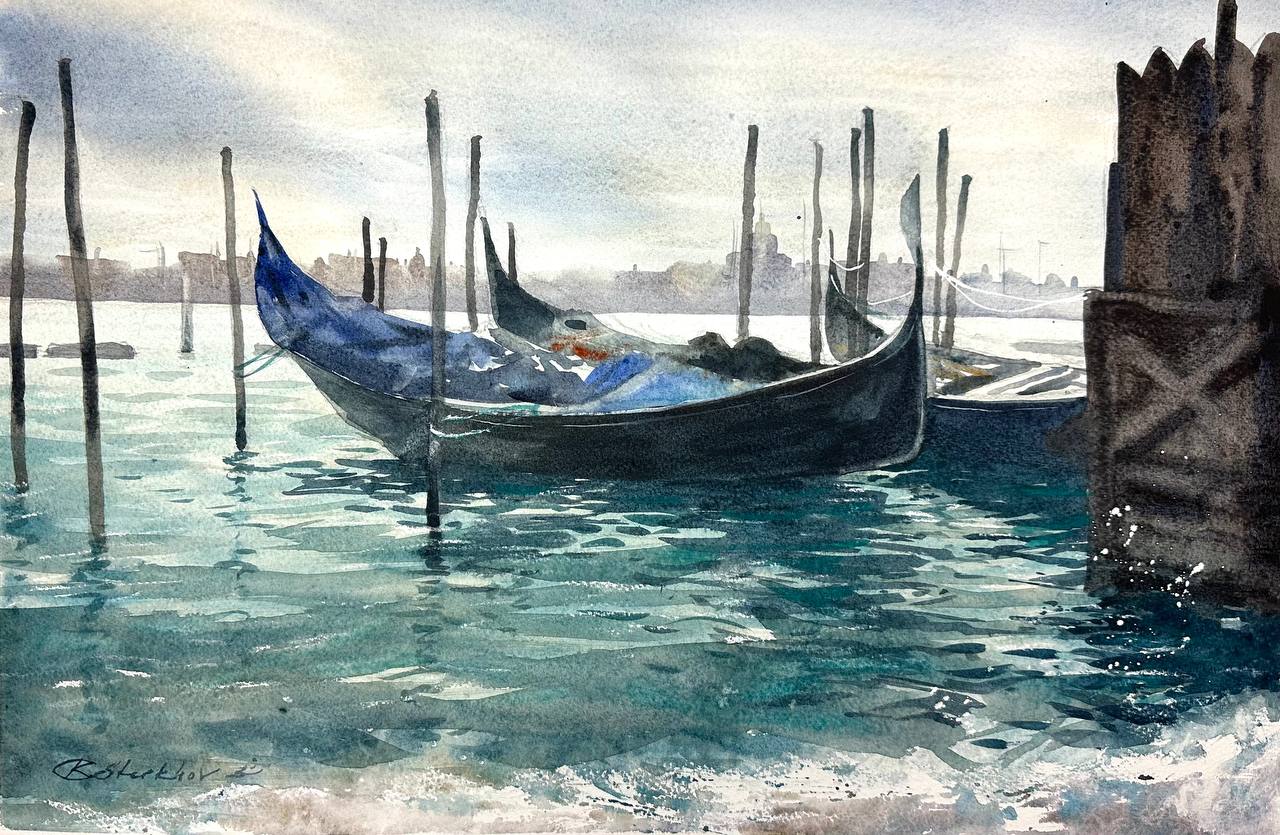
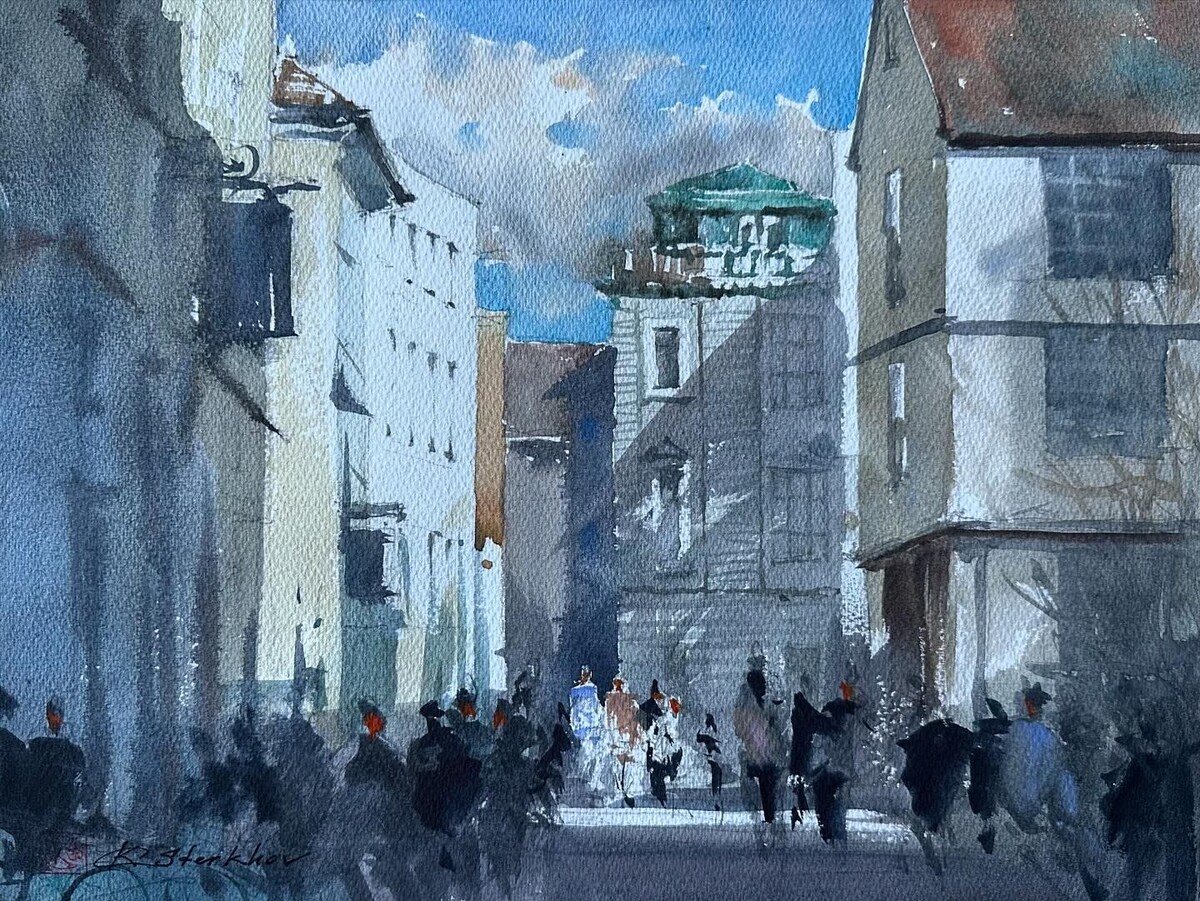
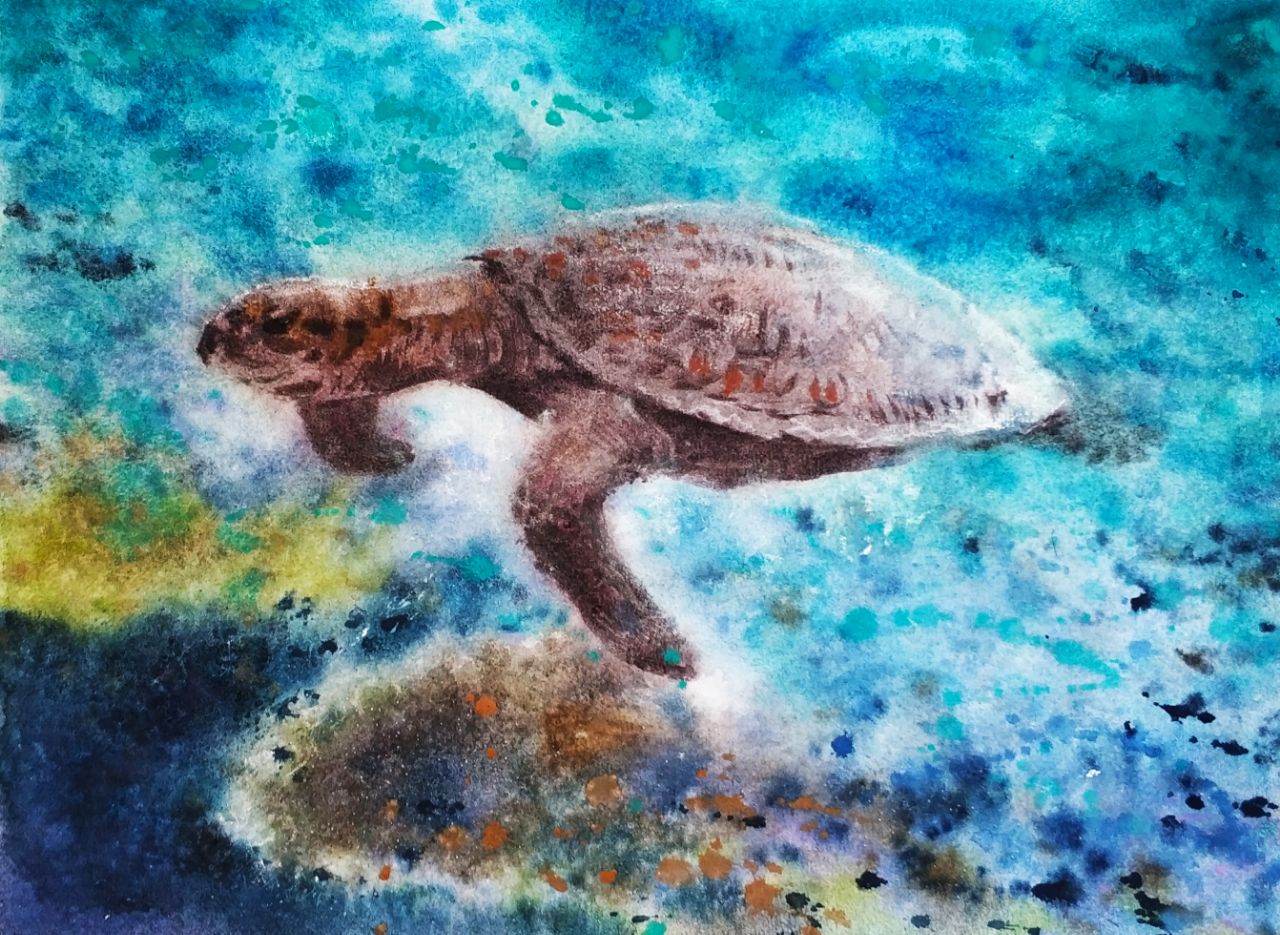
What You Will Paint in This Course:


Meet Your Instructor
Konstantin Sterkhov
"I've watched hundreds of painters stall on the same four things."
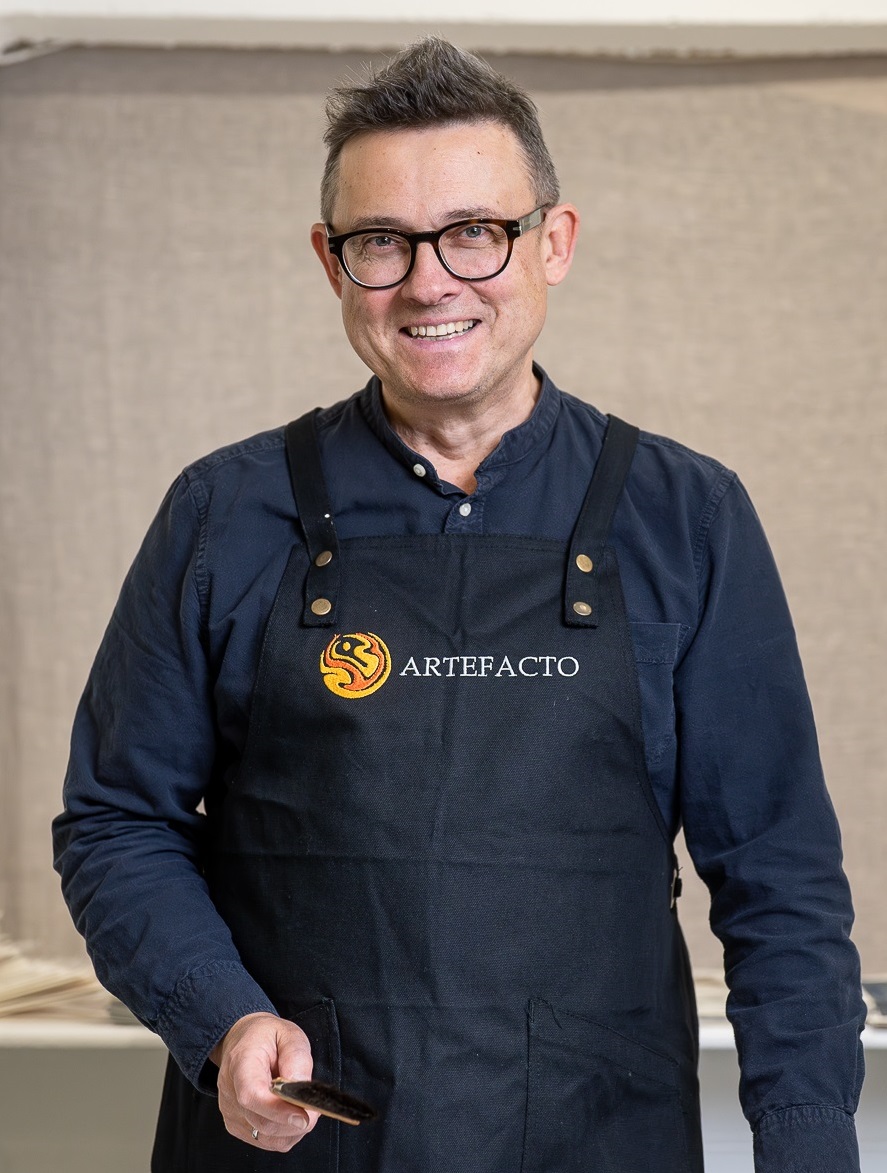
"I've been painting for over thirty years and teaching for twenty. In that time I've watched a lot of people arrive at an advanced course and struggle — not with the subject, but with something underneath it. A wash that won't lay flat. A value structure nobody ever read."
"They didn't need a harder subject. They needed to practice four things properly, once. So I built this course the way I'd want it built: one element at a time, hands on paper from the first lesson, a finished painting at the end of each stage."
- 30+ years painting · 20+ teaching · 200+ international exhibitions
- Repin Academy graduate · jury member at Fabriano in Acquerello
- Brand ambassador for Daniel Smith · author of 11 watercolor books, including the Masters of Watercolor series
- Work in permanent museum collections in Italy, Mexico, Finland, and Russia
What You Leave With
What your hands will know at the end
Four topics you could read about in an afternoon. Four skills that take practice
Materials you understand
You'll know what your paper does under a third wash — and why your results stopped being random.
Five techniques you pick on purpose
Not the one you always use. The one this passage needs.
Tone you can read before you paint
You'll look at a reference and see light and dark structure first, hue second.
Color mixed with intention
From primaries, with a system. Muddy becomes a choice you didn't make, not an accident.
Three finished paintings
Not a folder of half-starts. Three complete works, each proving one element.
The ability to diagnose your own work
When a painting fails, you'll name which of the four it was. That's the difference between improving and hoping.
While You Learn you won't be working alone
During your studies, you receive personal feedback from professionals and the support of a creative community of like - minded people — learning becomes easier, more inspiring and more interesting.
Individual written feedback
- Three detailed reviews of your finished paintings plus one creative assignment, within your first 75 days. Written by a professional curator — what worked, what didn't, what to change on the next sheet.
- Premium and Premium PRO.
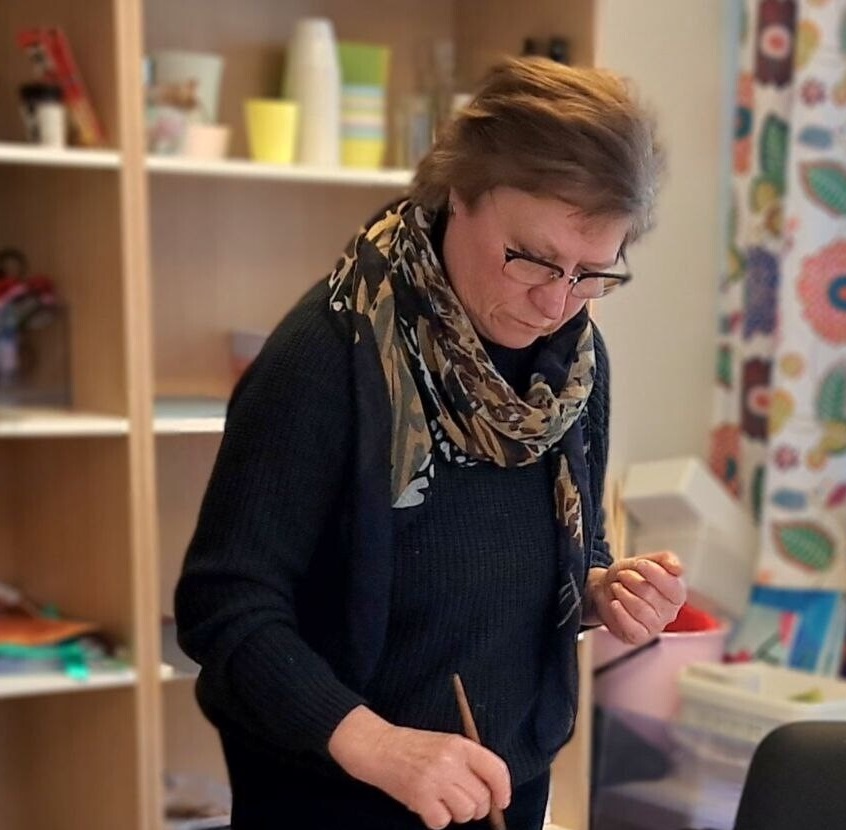
A moderated community on WhatsApp
- Daily conversation with painters working through the same four elements. Questions, work in progress, honest reactions. Moderated by our community team.
- All plans.

Certificate of completion
- Issued when you finish the course. Recognition of your work — usable professionally if your work touches the arts, and worth having either way.
- Premium and Premium PRO.

Students
Painters who went back and practiced the basics on purpose
1000+ students · 6 years
Watch A Lesson
Choose Your Plan
Plan
Standard
- 16 video lessons in full HD from 2 camera angles (4h 45min)
- 3 completed paintings
- Thumbnails and exercises
- 24/7 access from any location at your own pace
- LIFETIME access to the video lessons
- Access to the moderated students community on WhatsApp
- Final project (your own painting)
Bonus
- 30 ArtiCoins
Plan
Premium
- 16 video lessons in full HD from 2 camera angles (4h 45min)
3 completed paintings
Thumbnails and exercises
- 24/7 access from any location at your own pace
- LIFETIME access to the video lessons
- Access to the moderated students community on WhatsApp
- Final project (your own painting)
- Official certificate of completion
- Individual written feedback from professional curator within 75 days
Bonus
- 40 ArtiCoins
Plan
Premium Pro
- 16 video lessons in full HD from 2 camera angles (4h 45min)
3 completed paintings
Thumbnails and exercises
- 24/7 access from any location at your own pace
- LIFETIME access to the video lessons
- Access to the moderated students community on WhatsApp
- Final project (your own painting)
- Official certificate of completion
- Individual written feedback from professional curator on each painting within 75 days
- Extra learning materials: 3 months of Artefacto Family membership
Bonus
- 40 ArtiCoins
Plan
Standard
- 16 video lessons in full HD from 2 camera angles (4h 45min)
- 3 completed paintings
- Thumbnails and exercises
- 24/7 access from any location at your own pace
- LIFETIME access to the video lessons
- Access to the moderated students community on WhatsApp
- Final project (your own painting)
Bonus
- 30 ArtiCoins
Plan
Premium
- 16 video lessons in full HD from 2 camera angles (4h 45min)
3 completed paintings
Thumbnails and exercises
- 24/7 access from any location at your own pace
- LIFETIME access to the video lessons
- Access to the moderated students community on WhatsApp
- Final project (your own painting)
- Official certificate of completion
- Individual written feedback from professional curator within 75 days
Bonus
- 40 ArtiCoins
Plan
Premium Pro
- 16 video lessons in full HD from 2 camera angles (4h 45min)
3 completed paintings
Thumbnails and exercises
- 24/7 access from any location at your own pace
- LIFETIME access to the video lessons
- Access to the moderated students community on WhatsApp
- Final project (your own painting)
- Official certificate of completion
- Individual written feedback from professional curator on each painting within 75 days
- Extra learning materials: 3 months of Artefacto Family membership
Bonus
- 40 ArtiCoins
Artefacto Family
The course teaches you how. Family is what you do next.
Your three months begin on September 1.

Available with Premium PRO during the launch only.
The four elements start working about six weeks after the course ends. That's exactly when most painters stop practicing.
You'll finish with three paintings and four elements you've practiced. Then the course ends, and you're on your own with them — which is where practice quietly stops for most people. Family is three months of not stopping.
Autumn in the Family runs September through November — one master per month.
September — Simplify. Pasqualino Fracasso. Seeing through a complex scene: what to keep, what to change, what to leave out. Signature Member of the American Watercolor Society and the National Watercolor Society.
October — Structure. Amit Kapoor. Building the painting before you start it — light source, perspective, focal point, and where you want the eye to travel. Founder of the Watercolour Society of India.
November — Light. Hazel Soan. Treating light as the subject rather than the finishing touch: commit early, let the darks define everything else. Work in the National Portrait Gallery collection.
Every session is recorded. Lifetime access to all Family materials, demonstrations, and feedback sessions — they stay yours after the three months end.
Value: $/€ 150
Every month with Artefacto Family you get:
A live Zoom session with that month's master — full demonstration, paint along, questions answered
Two curator-led sessions where you bring your own work
The full Family library and the club community
No Risk
Before you decide
Worried it's beneath your level?
Full refund within 14 days if the first lessons tell you this isn't where your gap is.
Freeze for Premium and Premium PRO plans.
Start date is not convenient? We freeze the course (1 time free of charge).
No time right now?
Lifetime access. Two hours a week is enough, and there's no cohort to fall behind.
Materials
Start with what's already on your table
Don't buy anything yet. Choosing materials is the first thing we do together.

Element One is six lessons on materials — what paper does, what each brush leaves behind, how paint should sit on a palette, and how to set up a place you can work in twice. We test it together, with what you already have.
To begin, you need:
Watercolor paper А3 preferably cold pressed, 300 g
Brushes
Paints
Hardboard and a paper tape to fix the paper if the paper is not fixed in a block
Pencil, eraser, wax crayon or candle, masking fluid or a masking pen, container for water, napkins
Hairdryer
My full material list is inside the course. Nothing special needs buying before you start.

FAQ
Still have questions?
Our team is here to help. Not sure which plan is right for you? Just reach out — we'll guide you in a few minutes.
Contact us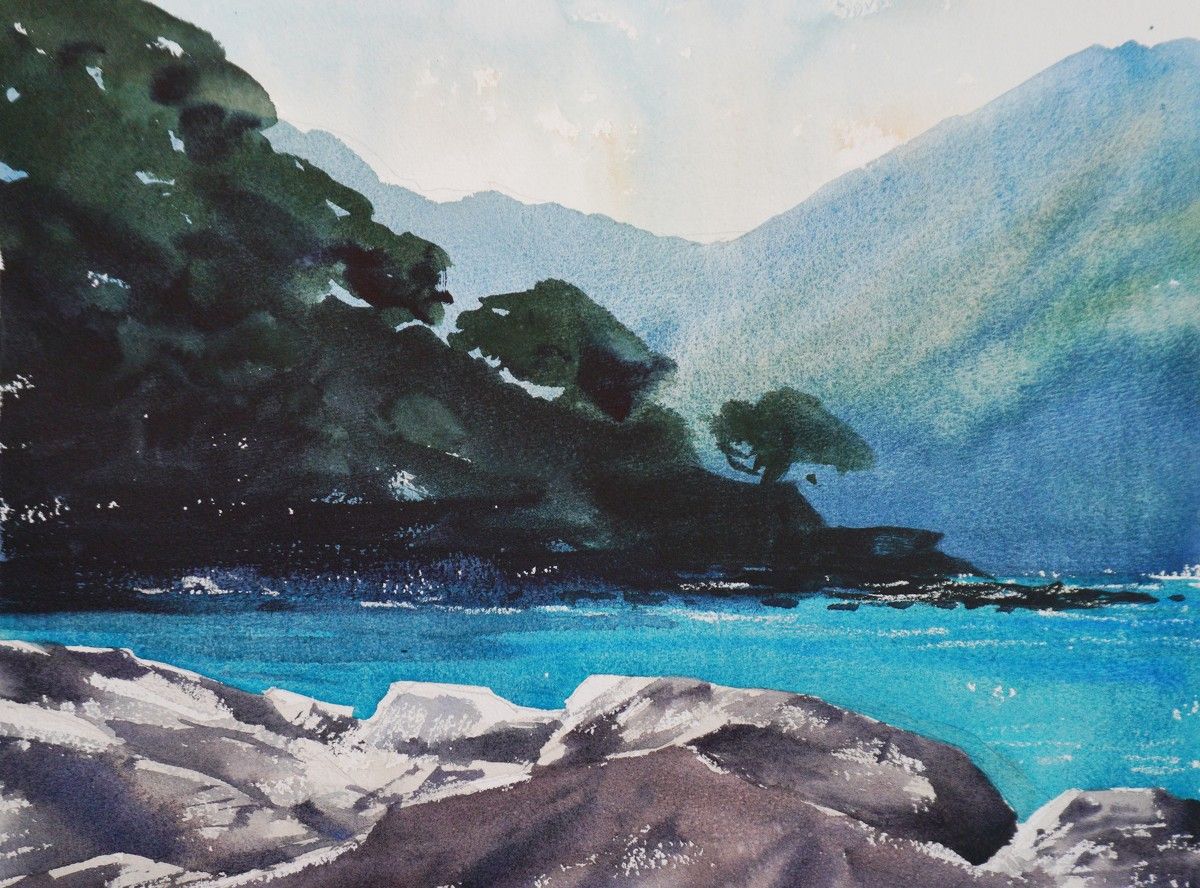
You've watched someone lay a wash and thought: I want to paint like that.
You still can. Start with one element. Practice it. Paint it. Then the next.
"You start painting from the very beginning and learn the rules in parallel." — Konstantin Sterkhov